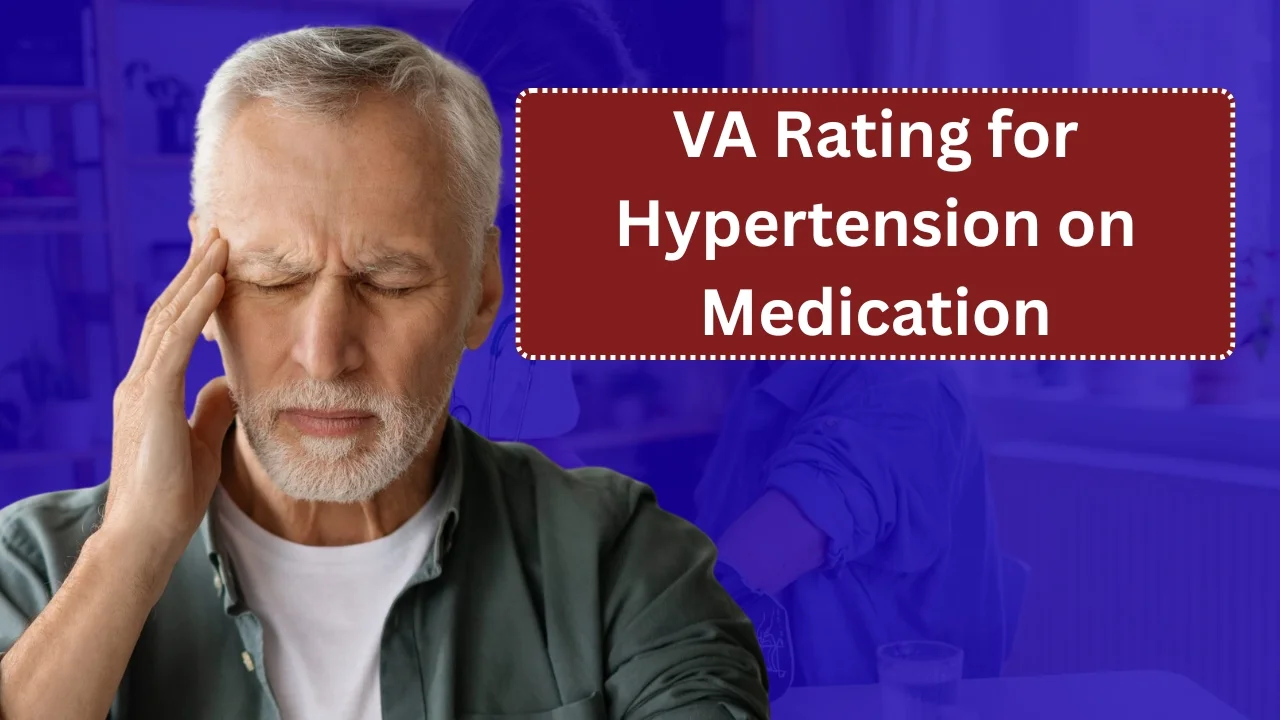
High blood pressure, also known as hypertension, is one of the most common chronic conditions affecting veterans. Many service members develop hypertension during or after military service due to stress, physical demands, environmental exposures, or secondary medical conditions.

A common misconception is that controlled hypertension does not qualify for VA disability benefits. That is incorrect. Even if your blood pressure is managed with medication, the VA still evaluates your condition based on historical readings and the need for continuous treatment.
“Controlled does not mean cured in the VA’s eyes. Medication does not erase the underlying disability,” said by Brian Reese, VA disability expert.
Also Read VA COLA Increase 2026: What Veterans Need to Know About the New Cost-of-Living Adjustment
Overview: VA Disability for Hypertension on Medication
| Category | Key Details |
|---|---|
| VA Diagnostic Code | 7101 |
| Rating Range | 10% to 60% |
| Medication Considered | Yes |
| Key Factor | Blood pressure history |
| Service Connection Required | Yes |
| Common Secondary Conditions | Heart disease, kidney disease, sleep apnea |
Can I Get a VA Disability Rating for Hypertension on Medication?
Yes. The VA explicitly allows compensation for hypertension even when it is well controlled with medication.

The key issue is whether your condition meets the minimum criteria for a compensable rating, either through current blood pressure readings or a history of elevated readings requiring continuous medication.
For example, if your diastolic pressure was predominantly 100 mmHg or higher before medication, and you now require ongoing treatment, you may qualify for a 10% VA rating.

“Veterans are often denied because they focus only on current readings instead of historical evidence,” explains a former VA rater.

How the VA Rates Hypertension?
The VA rates hypertension under 38 CFR § 4.104, Schedule of Ratings for the Cardiovascular System, Diagnostic Code (DC) 7101.
Hypertension ratings are based primarily on blood pressure measurements, not symptoms. Continuous medication plays a role mainly at the 10% level.
VA Rating Chart for Hypertension (DC 7101)
| Blood Pressure Criteria | VA Rating |
|---|---|
| Diastolic predominantly 130 mmHg or more | 60% |
| Diastolic predominantly 120 mmHg or more | 40% |
| Diastolic predominantly 110 mmHg or more OR systolic predominantly 200 mmHg or more | 20% |
| Diastolic predominantly 100 mmHg or more OR systolic predominantly 160 mmHg or more OR history of diastolic 100+ with continuous medication | 10% |
Important VA Notes for Hypertension Ratings
VA Confirmation Rule
Hypertension must be confirmed by two or more readings on at least three different days.
Separate Ratings Allowed
Hypertension is rated separately from heart disease and other cardiovascular conditions.
“Many veterans leave money on the table by not claiming hypertension separately from heart disease,” said by Brian Reese.
Why Medication Still Matters for VA Ratings?
Medication does not disqualify you from benefits. In fact, it can support your claim.
For a 10% rating, the VA explicitly recognizes a history of elevated diastolic pressure and a requirement for continuous medication.
“The VA looks at what your blood pressure would be without medication,” explains a VA-accredited medical consultant.
Proving Service Connection for Hypertension
Direct Service Connection
You must show:
- A current medical diagnosis of hypertension
- An in-service injury, illness, or elevated blood pressure readings
- A medical nexus linking service to your condition
Secondary Service Connection
Hypertension is commonly granted as secondary to other service-connected conditions, such as PTSD, diabetes, kidney disease, or sleep apnea.
“Secondary hypertension claims are among the most successful VA claims when properly supported,” said by Brian Reese.
Filing a VA Claim for Hypertension on Medication
Four Ways to File a VA Claim
Veterans can file:
- Online
- By mail
- In person
- By fax
As of late 2024, average VA claim processing time is about 139 days.
Evidence That Strengthens Your Claim
Helpful documents include:
- VA and private medical records
- Blood pressure logs
- Medication history
- Buddy statements
“Medication records often prove continuous treatment, which is critical for a compensable rating,” explains a VA claims specialist.
C&P Exam for Hypertension
Some veterans are scheduled for a Compensation & Pension (C&P) exam.
The examiner evaluates:
- Blood pressure readings
- Medical history
- Medication usage
- Service connection theory
“The C&P exam is not the place to downplay your condition,” said by Brian Reese.
Common Mistakes Veterans Make With Hypertension Claims
Veterans often lose claims due to:
- Missing historical blood pressure evidence
- Assuming medication disqualifies them
- Not claiming hypertension as secondary
- Missing C&P exams
Secondary Conditions Linked to Hypertension
Hypertension may cause or worsen:
- Heart disease
- Kidney disease
- Pulmonary hypertension
- Mood disorders
- Sleep apnea
“Hypertension is often the gateway condition to multiple secondary claims,” explains a VA medical advisor.
Why VA Disability for Hypertension Matters?
Even a 10% rating can increase your combined VA disability rating and open the door to higher compensation through secondary conditions.
“Hypertension claims are foundational. They often open the door to higher overall ratings,” said by Brian Reese.
FAQs
What is the VA rating for hypertension on medication?
VA ratings range from 10% to 60% under DC 7101, depending on blood pressure readings and medical history.
Can I get a VA rating if my blood pressure is controlled?
Yes. The VA considers historical readings and continuous medication use.
Is medication required for a higher rating?
No. Higher ratings are based on blood pressure levels, not medication.
Does hypertension have to start in service?
No. It can be service-connected secondarily to other conditions.