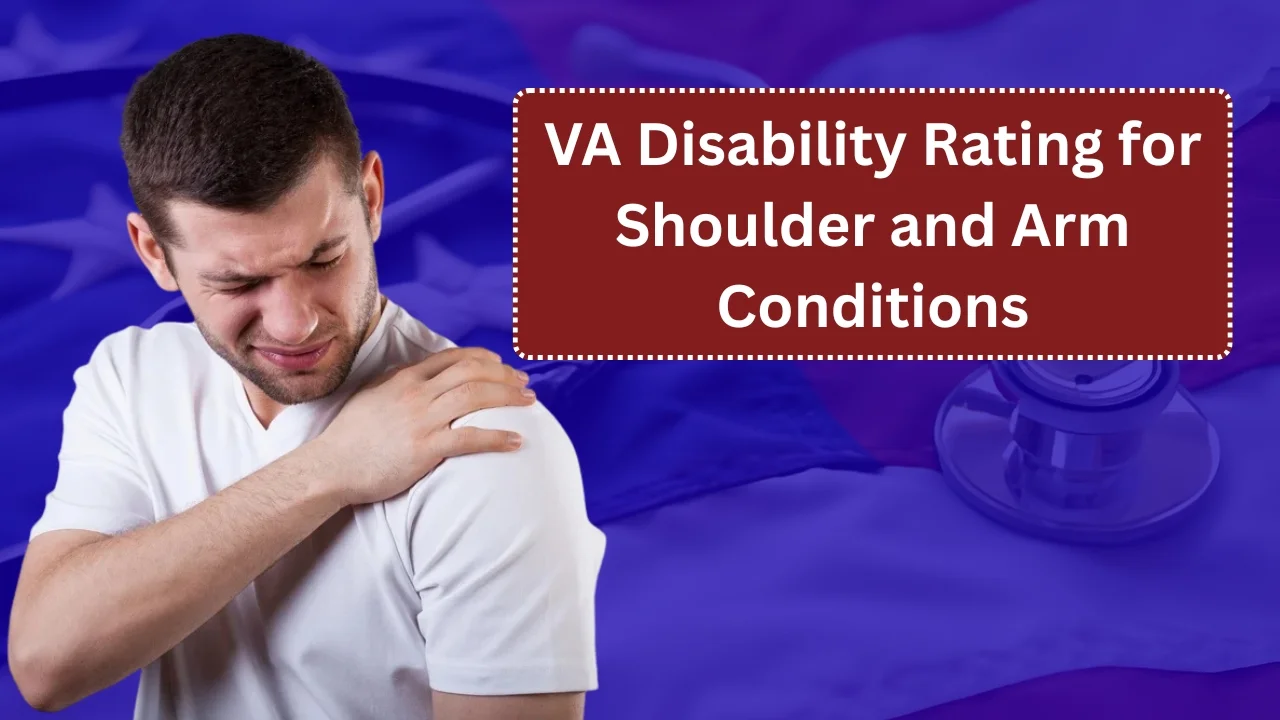
Shoulder and arm conditions are common in veterans due to the physically demanding nature of military service. Heavy lifting, repetitive motions, trauma from accidents, and extended use of equipment increase the risk of shoulder and arm injuries. Understanding how the VA rates these conditions is crucial for veterans seeking disability compensation.

VA disability ratings for shoulder and arm conditions typically range from 10% to 50%, with higher ratings possible in severe cases such as amputation or severe dislocations. Your rating depends on the severity, frequency, and duration of your symptoms, along with the extent of functional impairment caused by the condition.
“A proper understanding of the rating criteria can help veterans ensure their symptoms are documented correctly, leading to a fair rating,” says Brian Reese, VA disability expert.
Also Read VA COLA Increase 2026: What Veterans Need to Know About the New Cost-of-Living Adjustment
Common Shoulder and Arm Conditions in Veterans
Shoulder and arm conditions in veterans can result from repetitive use, trauma, or injury sustained during training, combat, or other military duties. Some of the most common conditions include:

Rotator Cuff Tears
Damage to the group of muscles and tendons that stabilize the shoulder joint. This condition causes pain, weakness, and limited range of motion.
Shoulder Impingement Syndrome
This occurs when tendons in the shoulder are compressed during arm movements, causing pain and reduced mobility.

Bursitis
Inflammation of the bursa that cushions the bones and tendons near the shoulder, leading to pain and restricted movement.
Tendonitis
Injury or inflammation of the tendons, often caused by repetitive use, which leads to pain and difficulty moving the joint.

Dislocations and Fractures
Injuries such as shoulder dislocations or fractures often caused by trauma, which can result in severe pain and long-term functional impairment.
Frozen Shoulder (Adhesive Capsulitis)
A condition characterized by stiffness and pain in the shoulder joint, leading to a significant reduction in range of motion.
Arthritis
Both osteoarthritis and rheumatoid arthritis can affect the shoulder and arm, leading to pain, swelling, stiffness, and decreased range of motion.
Nerve Injuries
Injuries to the nerves, such as brachial plexus injuries, which cause pain, numbness, and weakness in the shoulder and arm.
Muscle Strains and Sprains
Common from the physical demands of military service, these conditions cause pain, swelling, and difficulty moving the shoulder or arm.
Risk Factors for Shoulder and Arm Conditions in Veterans
Military service often increases the risk of developing shoulder and arm conditions due to the physical strain and demands of duty. Key risk factors include:
- Repetitive Arm Movements: Lifting, pushing, and pulling heavy loads increase the risk of tendonitis and bursitis.
- Heavy Lifting: Frequently lifting equipment and gear can lead to strains, tears, and fractures.
- Trauma and Injury: Combat and training injuries often cause dislocations, fractures, and nerve damage.
- Improper Ergonomics: Poor lifting techniques and awkward postures contribute to musculoskeletal disorders.
- Pre-existing Conditions: Veterans with arthritis or other health issues are more prone to joint damage.
- Age and Gender: Certain conditions like rotator cuff tears and frozen shoulder are more common as veterans age.
“It’s important to recognize that these conditions often have long-term effects that can make it more difficult for veterans to function in daily life,” says Dr. Alan Morrison, PhD, VA examiner.
VA Ratings for Shoulder and Arm Conditions
The VA uses a series of Diagnostic Codes (DCs) to rate shoulder and arm conditions based on severity and functional limitations. Here is a detailed table explaining the VA ratings for shoulder and arm conditions:
| Condition | Diagnostic Code | Description | Rating (Major Arm) | Rating (Minor Arm) |
|---|---|---|---|---|
| Ankylosis of the Shoulder Joint | DC 5200 | Stiffness and immobility of the shoulder joint | 50% (Unfavorable) | 40% (Unfavorable) |
| Limitation of Motion of the Arm | DC 5201 | Limited range of motion | 40% (25 degrees) | 30% (25 degrees) |
| Impairment of the Humerus | DC 5202 | Conditions like malunion, recurrent dislocations, fibrous union, or loss of humeral head | 50% (Fibrous Union) | 40% (Fibrous Union) |
| Impairment of Clavicle or Scapula | DC 5203 | Dislocations, malunion, or nonunion of the clavicle or scapula | 20% (Dislocation) | 20% (Dislocation) |
| Muscle Group I (Shoulder Girdle) | DC 5301 | Injuries affecting the upper arm and shoulder girdle | 40% (Severe) | 30% (Severe) |
| Muscle Group II (Depression of Arm) | DC 5302 | Involves the muscles responsible for lowering the arm from overhead to hanging | 40% (Severe) | 30% (Severe) |
| Muscle Group III (Deltoid Muscles) | DC 5303 | Controls arm elevation and abduction | 40% (Severe) | 30% (Severe) |
“The most common shoulder conditions veterans face are related to repetitive movement and heavy lifting, so it’s crucial to understand how these injuries impact mobility and quality of life,” says Dr. Marcus Reynolds, former VA Compensation & Pension examiner.
How the VA Rates Common Shoulder and Arm Conditions?
Each condition is rated based on its severity, with higher ratings assigned to conditions that cause more significant functional impairment.
Rotator Cuff Tears
- Mild (Minor Arm): 10%
- Moderate (Minor Arm): 20%
- Severe (Minor Arm): 30%
- Mild (Major Arm): 20%
- Moderate (Major Arm): 30%
- Severe (Major Arm): 40%
Shoulder Impingement Syndrome
- Mild: 10%
- Moderate to Severe: 20%-30%
Bursitis
- Mild: 10%
- Moderate: 20%
- Severe: 30%
Tendonitis
- Mild: 10%
- Moderate: 20%
- Severe: 30%
Dislocations and Fractures
- Recurrent Dislocations (Occasional): 20%
- Frequent Dislocations: 30%
- Fractures (Severe): 30% or higher
Frozen Shoulder
- Mild: 20%
- Moderate: 30%
- Severe: 40%-50%
Arthritis
- Mild: 10%
- Moderate: 20%
- Severe: 30% or higher
Nerve Injuries
- Mild: 20%
- Moderate: 40%
- Severe or Complete Paralysis: 70% or more
Final Thought
Understanding the VA’s rating criteria for shoulder and arm conditions is essential for veterans filing a disability claim. With the proper documentation, medical evidence, and knowledge of how the VA evaluates your condition, you can ensure a fair rating. Whether you’re dealing with a rotator cuff tear, frozen shoulder, or nerve damage, preparing your claim accurately will help maximize your chances of receiving the benefits you deserve.
“The VA is focused on functional loss. If your condition interferes with daily activities, make sure you document that thoroughly,” advises Brian Reese, VA disability expert.
FAQs
What is the highest VA rating for a shoulder or arm condition?
The highest rating for a shoulder or arm condition is 90%, typically for amputation at the shoulder joint.
Can my rating increase if my shoulder condition worsens?
Yes, you can apply for a rating increase if your condition worsens over time.
Is the dominant arm rated higher than the non-dominant arm?
Yes, the dominant (major) arm is rated higher because it has a greater impact on daily activities and work performance.
How does the VA determine the severity of shoulder and arm conditions?
The severity is measured by degrees of limitation in motion or pain during movement.