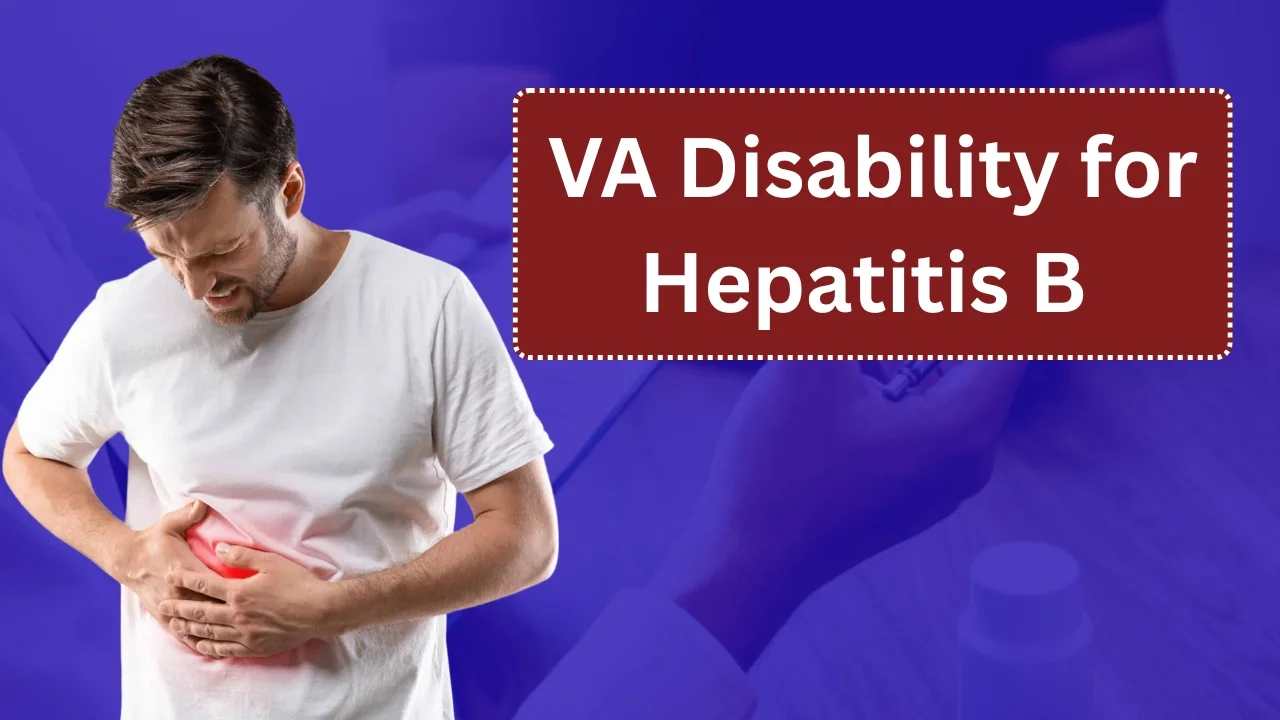
VA disability rules for digestive and liver conditions underwent major updates in 2024, and those changes fully apply in 2026. One of the most important updates affects Hepatitis B, now evaluated under Diagnostic Code (DC) 7345 for chronic liver disease without cirrhosis.

According to VA disability expert Brian Reese, “The new criteria focus less on lab results alone and more on how Hepatitis B actually impacts a veteran’s daily functioning, work capacity, and need for treatment.”

Under the updated rules, veterans with Hepatitis B may qualify for VA disability ratings from 0% to 100%, with clear breaks at 20%, 40%, and 60%.
Overview: VA Disability Ratings for Hepatitis B
| VA Rating | Key Criteria (DC 7345) |
|---|---|
| 100% | Progressive disease requiring antiviral + immunomodulatory therapy |
| 60% | Continuous medication + substantial weight loss + multiple symptoms |
| 40% | Continuous medication + minor weight loss + multiple symptoms |
| 20% | Chronic liver disease with at least one qualifying symptom |
| 0% | Prior history, currently asymptomatic |
A former VA examiner explains, “These changes bring Hepatitis B ratings more in line with real-world medical treatment and symptom burden.”
Also Read Army Approves $1,550 Monthly Retention Bonus for Senior Warrant Officers in 2026
What Is Hepatitis B?
Hepatitis B is a viral infection of the liver caused by the hepatitis B virus (HBV). It can be either acute (short-term) or chronic, with chronic cases posing long-term health risks.

How Hepatitis B Spreads?
- Blood-to-blood contact
- Unprotected sexual contact
- Shared needles or syringes
- Mother-to-child transmission at birth
HBV is highly infectious and can survive outside the body for up to seven days, making accidental exposure a serious concern.

Common Symptoms of Hepatitis B
Many veterans are asymptomatic early on, but chronic Hepatitis B may cause:
- Persistent fatigue
- Malaise or flu-like feelings
- Loss of appetite (anorexia)
- Abdominal pain
- Jaundice (yellowing of skin or eyes)
- Itching (pruritus)
- Joint pain (arthralgia)
- Liver enlargement (hepatomegaly)
A hepatology specialist notes, “Veterans often underestimate fatigue and malaise, but those symptoms are central to VA rating decisions.”
Hepatitis B Risk Factors for Veterans
Veterans face unique exposure risks tied to military service, including:
- Combat-related blood exposure
- Medical care in overseas deployments
- Older vaccination practices involving reused needles
- Tattoos or piercings from non-sterile environments
- High-prevalence deployment regions
- Shared equipment or emergency medical care
These factors can help establish service connection, especially when supported by credible lay statements.
VA Disability Rating Criteria Explained (DC 7345)
100% VA Rating for Hepatitis B
Criteria:
- Progressive chronic liver disease
- Requires parenteral antiviral therapy and
- Parenteral immunomodulatory therapy (e.g., interferon)
- Rating continues for six months after treatment ends
This rating reflects the most severe cases with aggressive treatment needs.
60% VA Rating for Hepatitis B
Requires:
- Progressive chronic liver disease
- Continuous medication
- Substantial weight loss
- Plus at least two of the following:
- Daily fatigue
- Malaise
- Anorexia
- Hepatomegaly
- Pruritus
- Arthralgia
A VA clinician states, “Weight loss combined with systemic symptoms is a strong indicator of functional impairment.”
40% VA Rating for Hepatitis B
Requires:
- Progressive chronic liver disease
- Continuous medication
- Minor weight loss
- Plus two or more qualifying symptoms (same list as 60%)
20% VA Rating for Hepatitis B
Requires:
- Chronic liver disease
- At least one of the following:
- Intermittent fatigue
- Malaise
- Anorexia
- Hepatomegaly
- Pruritus
This is now the most common compensable rating for symptomatic veterans.
0% VA Rating for Hepatitis B
Assigned when:
- Prior history of liver disease
- Veteran is currently asymptomatic
This rating still establishes service connection and protects future benefits.
Important VA Notes Veterans Must Know
- 100% ratings continue for six months after treatment ends
- If treatment is medically contraindicated, the VA may rate under cirrhosis criteria
- Sequelae like liver cancer or cirrhosis are rated separately, without pyramiding
- Hepatitis C remains evaluated under a different diagnostic code
What If You Already Have a Hepatitis B VA Rating?
Veterans with existing Hepatitis B ratings are grandfathered under the old criteria.
- Your rating will not be reduced unless medical improvement is clearly shown
- Claims pending as of May 19, 2024, are evaluated under both old and new criteria
- The VA must apply whichever rating is more favorable
Brian Reese emphasizes, “This is why filing sooner rather than later can directly impact lifetime compensation.”
Why These Changes Matter in 2026?
- Higher potential ratings for symptomatic veterans
- Clearer criteria tied to real-world symptoms
- Stronger protection for veterans already rated
- Improved fairness in digestive system claims
Final Thought
VA disability rules for Hepatitis B in 2026 are clearer, more structured, and more favorable for many veterans than in the past. The updated DC 7345 criteria focus on how the condition truly affects your daily life, ability to work, and need for ongoing treatment, rather than relying only on lab results or outdated standards.
If you are already service-connected, your rating is protected unless there is proven medical improvement. If your claim was pending around May 19, 2024, the VA must apply both the old and new criteria and award whichever results in the highest possible rating. For veterans who have never filed, understanding symptom documentation, treatment history, and functional impact is now more important than ever.
As Brian Reese often explains, “The strongest VA claims tell a clear story how the condition started, how it progressed, and how it limits your life today.”
Taking the time to document symptoms like fatigue, weight loss, itching, and daily limitations can make a measurable difference in your final rating.
FAQs
What is the highest VA rating for Hepatitis B?
Up to 100%, depending on treatment and severity.
Is continuous medication required for higher ratings?
Yes, for 40% and above.
Can fatigue alone qualify for compensation?
Yes, at the 20% level if chronic.
Will my old rating change automatically?
No, you are grandfathered unless improvement is shown.
Are liver complications rated separately?
Yes, but symptoms cannot be counted twice.