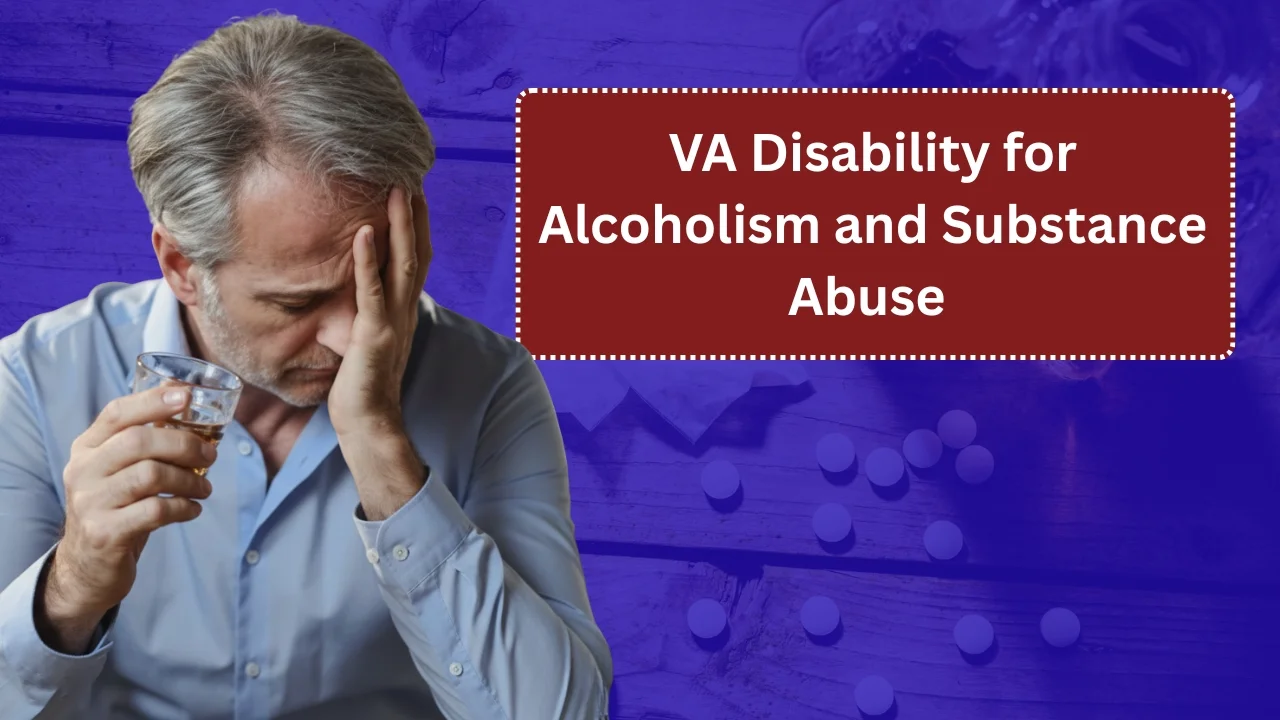
Many veterans struggle with alcohol or substance abuse after leaving the military, often as a way to cope with PTSD, depression, anxiety, or chronic pain. Yet when veterans try to file VA disability claims for alcoholism or drug abuse, they are frequently denied outright.
This leads to a common misconception that the VA never pays compensation for conditions related to substance abuse. That is not entirely true.
While the VA does not award disability ratings for primary alcoholism or drug abuse, there is a critical legal pathway that allows veterans to receive compensation when substance abuse is caused or aggravated by another service-connected condition. Understanding this distinction is essential to protecting your benefits.

What the VA Says About Alcoholism and Substance Abuse?
No Standalone VA Rating for Primary Substance Abuse
The VA does not recognize alcoholism or substance abuse as independently compensable disabilities. There is no VA diagnostic code for alcohol use disorder (AUD) or substance use disorder (SUD).
Under federal law, including 38 U.S.C. § 1110, disabilities resulting from a veteran’s own willful misconduct are excluded from compensation. Voluntary alcohol or drug abuse falls into this category.

“Primary substance abuse claims are denied because VA law treats them as willful misconduct, not as disabilities caused by service,” says a VA-accredited disability attorney.

This means a claim filed solely for alcoholism or drug addiction will be denied as not service-connected.
The Key Exception Veterans Need to Know
Secondary Service Connection Changes the Outcome
In the landmark case Allen v. Principi (2001), the federal courts ruled that the VA can compensate veterans for disabilities related to alcohol or drug abuse when that substance abuse is caused or aggravated by a service-connected condition.

The VA does not compensate the substance abuse itself. Instead, it compensates the medical conditions that result from it, as long as the chain of causation starts with a service-connected disability.
“Substance abuse is often a symptom of untreated PTSD or chronic pain, not a separate disease. VA policy now reflects that medical reality,” explains a board-certified psychiatrist.
Overview: When VA Compensation Is Possible
| Scenario | VA Compensation Eligible |
|---|---|
| Alcoholism as a primary condition | No |
| Drug abuse without service connection | No |
| Alcohol abuse caused by PTSD | Yes (secondary conditions) |
| Substance abuse caused by chronic pain | Yes |
| Liver disease caused by PTSD-related drinking | Yes |
| Heart disease caused by substance abuse secondary to injury | Yes |
Eligibility Rules for VA Compensation
To qualify for VA disability compensation related to alcoholism or substance abuse, veterans must meet all three of the following requirements:
1. A Service-Connected Primary Disability
Common qualifying conditions include:
- PTSD
- Major depressive disorder
- Anxiety disorders
- Chronic orthopedic pain
- Traumatic Brain Injury (TBI)
2. Evidence Substance Abuse Was Caused or Aggravated
Medical records must show the alcohol or drug use was:
- A form of self-medication
- A response to chronic pain
- A coping mechanism for mental health symptoms
3. A Diagnosed Secondary Condition
There must be a medically diagnosed condition caused or worsened by the substance abuse.
“Alcoholism is often the bridge between a service-connected condition and a serious secondary disability. The VA focuses on that connection,” says a senior VA claims analyst.
Common Secondary Conditions Linked to Substance Abuse
When substance abuse is secondary to a service-connected disability, the VA may award compensation for conditions such as:
- Liver disease (fatty liver, alcoholic hepatitis, cirrhosis)
- Heart conditions (cardiomyopathy, hypertension, arrhythmias)
- Pancreatitis
- Peripheral neuropathy
- Gastrointestinal disorders (GERD, ulcers, esophagitis)
- Cognitive impairment or alcohol-related dementia
- Worsening depression or anxiety
- Osteoporosis and fractures
- Certain cancers (liver, throat, colon)
Real-World VA Claim Examples
PTSD → Alcohol Abuse → Liver Disease
A veteran service-connected for PTSD begins drinking heavily to manage nightmares and anxiety. Years later, he develops cirrhosis. A medical nexus letter links the alcohol abuse to PTSD.
Result: Liver disease granted as a secondary service-connected disability.
Chronic Pain → Substance Abuse → Heart Condition
A veteran rated 40% for chronic back pain uses alcohol and prescription medications to cope. He later develops cardiomyopathy. Medical evidence links substance use to pain management.
Result: Heart condition awarded secondary service connection.
“The VA isn’t judging behavior. It’s evaluating medical causation. That distinction is critical,” explains an internal medicine specialist.
Payment and Compensation Details
How VA Disability Pay Works?
The VA does not pay compensation for alcoholism itself. Payment is based on the rating assigned to the secondary condition.
Estimated Monthly Compensation (2025)
| VA Rating | Monthly Compensation (Single Veteran) |
|---|---|
| 10% | ~$175 |
| 30% | ~$537 |
| 50% | ~$1,102 |
| 70% | ~$1,716 |
| 100% | ~$3,700+ |
Amounts may increase with dependents or additional service-connected disabilities.
Comparison: Primary vs Secondary Substance Abuse Claims
| Factor | Primary Abuse Claim | Secondary Claim |
|---|---|---|
| VA compensation | Not allowed | Allowed |
| Legal basis | Willful misconduct | Allen v. Principi |
| Requires nexus letter | Not applicable | Yes |
| Can support higher rating | No | Yes |
| May qualify for TDIU | No | Possibly |
Recent Updates and VA Policy Context
VA adjudication guidance continues to emphasize secondary service connection for substance-related conditions when supported by medical evidence. Claims lacking a nexus letter remain one of the most common reasons for denial.
VA reviewers are instructed to focus on causation, not moral judgment, when evaluating these claims.
Why This Matters for Veterans?
Substance abuse often signals worsening mental health or chronic pain. Even if a veteran does not file a secondary claim, documented substance abuse can support:
- Increased ratings for PTSD or depression
- Evidence of functional impairment
- Eligibility for TDIU if employment is affected
Ignoring this pathway can result in significant lost compensation.
FAQs
Can I get VA disability for alcoholism alone?
No. The VA does not award compensation for primary alcohol or drug abuse.
Can alcoholism be secondary to PTSD?
Yes. If PTSD caused or aggravated alcohol use, resulting medical conditions may qualify for compensation.
Do I need a nexus letter?
Yes. A strong medical nexus letter is often the deciding factor in secondary substance abuse claims.
What conditions are commonly approved as secondary?
Liver disease, heart conditions, pancreatitis, neuropathy, and worsening mental health are common.
Can substance abuse increase my PTSD rating?
Yes. It can demonstrate worsening symptoms and impaired functioning.