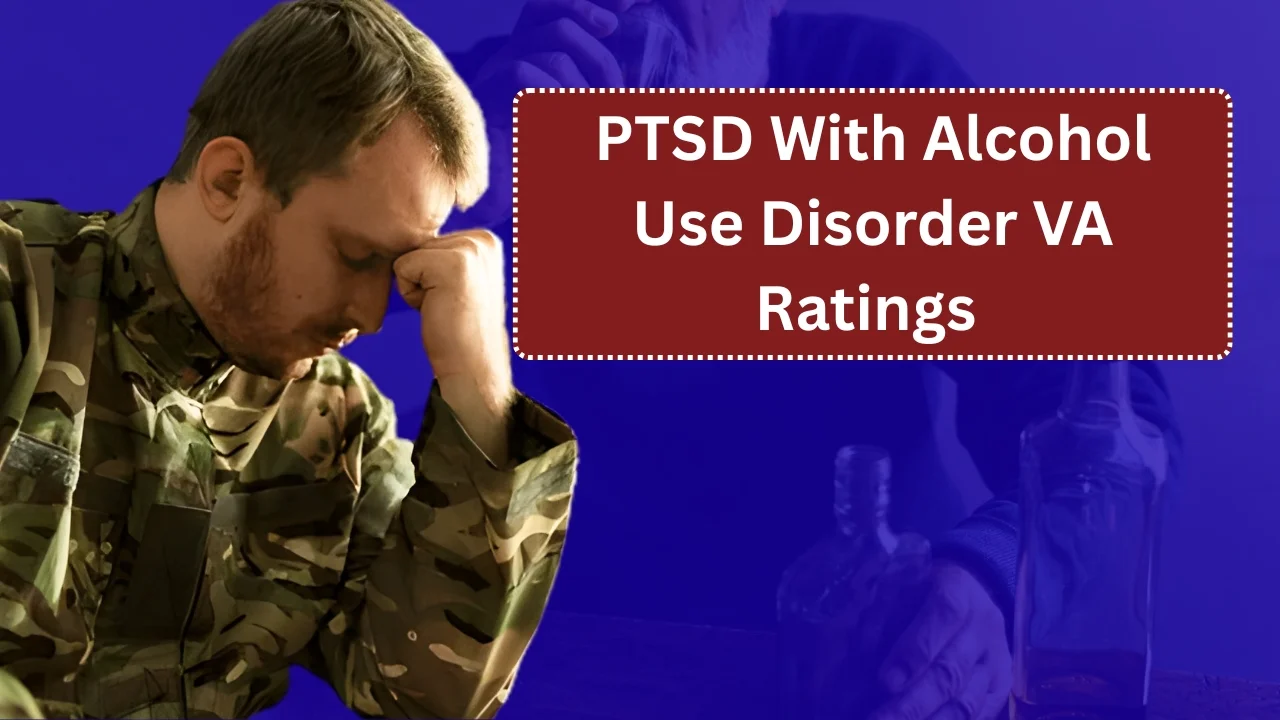
Post-Traumatic Stress Disorder (PTSD) is one of the most prevalent service-connected mental health conditions among U.S. veterans. Exposure to combat, military sexual trauma, life-threatening situations, or repeated high-stress environments can permanently alter how the brain processes fear, stress, and safety.
For many veterans, Alcohol Use Disorder (AUD) develops alongside PTSD not as reckless behavior, but as an attempt to cope with intrusive memories, nightmares, anxiety, and emotional numbness.
“Substance use among veterans is frequently a coping strategy for unresolved trauma rather than an independent disorder,” explained by Matthew J. Friedman, former Executive Director of the VA National Center for PTSD.
Also Read 2026 VA Rating Changes: Key Updates, Risks, and Timelines Veterans Must Know
The VA recognizes this relationship, but disability compensation follows strict legal rules. Understanding how PTSD with AUD is evaluated can make the difference between a denied claim and a life-changing rating.

PTSD and Alcohol Use Disorder
PTSD is a trauma-related mental health disorder marked by symptoms such as:
- Flashbacks and intrusive memories
- Hypervigilance and irritability
- Sleep disturbance and nightmares
- Avoidance behaviors
- Emotional numbing

Alcohol Use Disorder (AUD) involves a problematic pattern of alcohol use that leads to impaired functioning, dependence, or distress. Veterans with PTSD may drink to calm their nervous system, suppress memories, or manage anxiety.
“Alcohol temporarily dampens the fight-or-flight response, which explains why PTSD and alcohol misuse so often overlap,” said by Robert J. Ursano, Chair of Psychiatry at Uniformed Services University.
Also Read Army Approves $1,550 Monthly Retention Bonus for Senior Warrant Officers in 2026
Overview: PTSD With Alcohol Use Disorder and VA Disability
| Category | Key VA Consideration |
|---|---|
| Primary Condition | PTSD (Diagnostic Code 9411) |
| Alcohol Use Disorder | Not compensable alone |
| Legal Path | AUD considered secondary or a PTSD symptom |
| Rating Range | 0% to 100% |
| Key Focus | Occupational & social impairment |
| Evidence Needed | Nexus linking AUD to PTSD |
| Risk of Denial | High without medical linkage |
| Secondary Claims | Liver disease, pancreatitis, neuropathy |
Is There a Proven Connection Between PTSD and Alcohol Use Disorder?
Yes. Medical research consistently shows PTSD significantly increases the risk of alcohol dependence.
- Veterans with PTSD are 2–3 times more likely to develop AUD
- Among Vietnam-era veterans with PTSD, 60–80% reported alcohol misuse
- PTSD and AUD reinforce each other in a bidirectional cycle
“Alcohol misuse intensifies PTSD symptoms while PTSD increases reliance on alcohol making treatment more complex,” explained by Linda Schwartz, former Assistant Secretary of VA Mental Health Services.
This relationship is central to how the VA evaluates disability claims involving both conditions.
Can You Receive VA Disability Compensation for PTSD With AUD?
Yes, but only under specific conditions.
The VA does not compensate alcoholism by itself. However, compensation is allowed when:
- AUD developed because of service-connected PTSD
- Alcohol use is a symptom of PTSD
- AUD worsens occupational and social impairment
“VA law permits compensation when alcohol abuse is caused by a service-connected mental disorder,” said by Barton F. Stichman, Co-Director of the National Veterans Legal Services Program.
The legal distinction between primary alcoholism and secondary alcoholism is critical.
PTSD With Alcohol Use Disorder VA Rating Levels
The VA rates PTSD (including AUD effects) under the General Rating Formula for Mental Disorders.
Rating Impact: PTSD With AUD
| VA Rating | Functional Impact |
|---|---|
| 0% | Symptoms present, no work impairment |
| 10% | Mild symptoms during stress |
| 30% | Sleep issues, anxiety, occasional work disruption |
| 50% | Reduced productivity, mood instability, alcohol-related impairment |
| 70% | Severe impairment, impaired impulse control, inability to adapt |
| 100% | Total occupational and social impairment |
AUD often supports higher ratings when it causes:
- Missed work
- Poor judgment
- Relationship breakdowns
- Safety risks
How the VA Determines PTSD Ratings When AUD Is Present?
The VA evaluates real-world functioning, not just diagnoses.
Key Determination Factors
- DSM-5 PTSD diagnosis
- Verified in-service stressor
- Medical nexus connecting PTSD to service
- Evidence AUD developed as coping behavior
- Severity, frequency, and duration of symptoms
“Functional impairment how symptoms affect work and relationships is the cornerstone of VA mental health ratings,” explained by James Ridgway, Professor of Law at Ohio State University.
Important Legal and Medical Considerations
Alcohol Use Is Not Automatically Willful Misconduct
If alcohol use stems from PTSD, it is not willful misconduct under VA law.
Secondary Conditions May Be Compensated
Conditions caused by AUD may qualify as secondary service-connected disabilities, including:
- Cirrhosis
- Pancreatitis
- Peripheral neuropathy
Medical Evidence Is Essential
Strong claims include:
- Nexus letters
- Consistent treatment records
- Independent psychological evaluations
- Lay statements from family or peers
Pro Tips to Strengthen a PTSD With AUD VA Claim
1. Use VA Form 21-0781
Detail the traumatic stressor with dates, locations, and units.
2. Obtain an Independent Mental Health Opinion
Private evaluations often provide clearer nexus language.
3. Submit Buddy Statements
Family and fellow service members can document alcohol use tied to PTSD symptoms.
“Lay evidence often bridges gaps medical records cannot,” said by Michael Horan, VA-accredited attorney.
Why PTSD With AUD Ratings Matter?
A properly rated PTSD with AUD claim can:
- Increase monthly compensation
- Qualify veterans for TDIU
- Support secondary medical claims
- Strengthen long-term benefits for dependents
Understanding this interaction ensures veterans are not unfairly penalized for trauma-related coping behaviors.
Final Thought
PTSD with Alcohol Use Disorder is a legally recognized, medically supported, and compensable condition when properly documented. While the VA does not compensate alcoholism alone, it does recognize alcohol misuse as a symptom or consequence of PTSD and that recognition can significantly raise a veteran’s disability rating.
With strong medical evidence, a clear nexus, and honest documentation, veterans can secure the compensation they earned through service.
FAQs
Can alcohol use increase my PTSD rating?
Yes, if it worsens occupational or social impairment.
Is AUD rated separately?
No, it is considered within the PTSD rating.
Can the VA deny PTSD due to drinking?
Not if alcohol use is linked to PTSD.
Do I need a dual diagnosis?
Yes, both PTSD and AUD must be clinically diagnosed.
Should I disclose alcohol use at a C&P exam?
Yes honesty ensures an accurate rating.