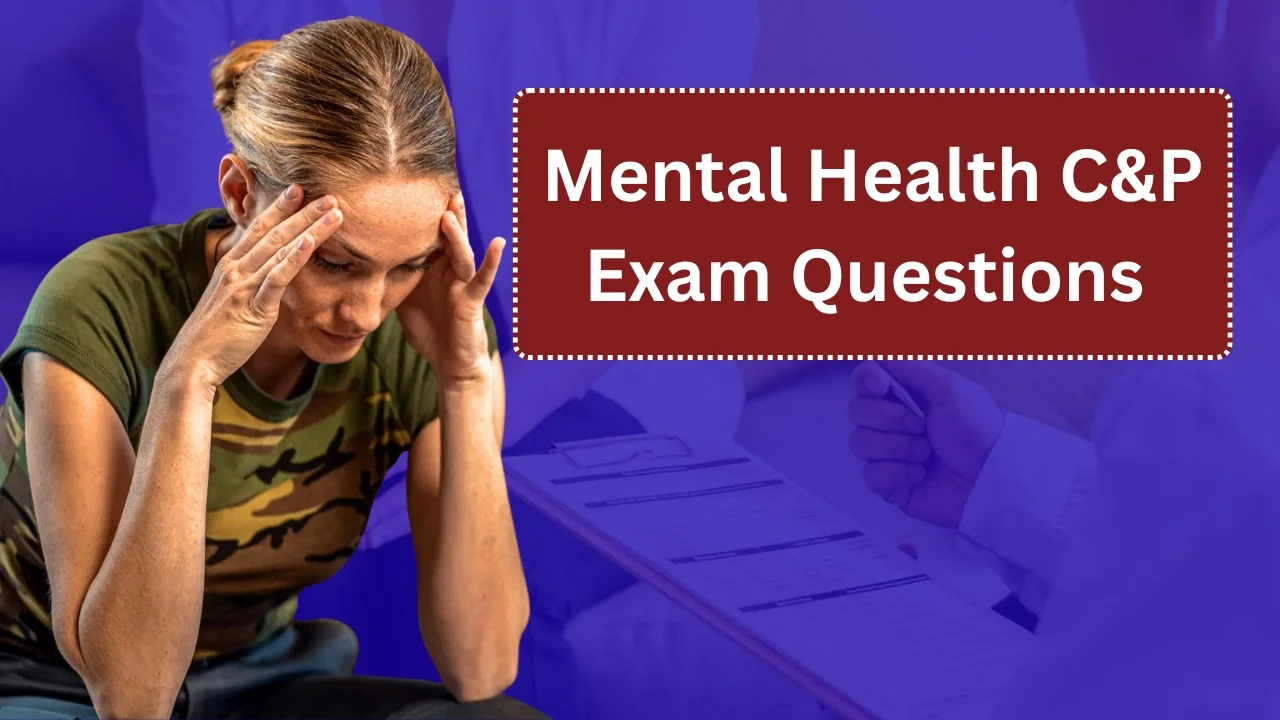
For many veterans, a mental health Compensation and Pension (C&P) exam is the most stressful part of the VA disability process. Talking openly about trauma, depression, anxiety, or PTSD is never easy, especially in a formal evaluation that can determine your financial stability and access to benefits.

Yet this exam is one of the most important steps in your claim. The VA uses the mental health C&P exam to decide whether a condition is service connected, whether symptoms have worsened, and how much those symptoms affect your ability to work and maintain relationships. Understanding what the examiner is looking for, how questions are framed, and how to prepare can make a meaningful difference in the outcome of your claim.
Purpose of a VA Mental Health C&P Exam
The VA schedules mental health C&P exams to answer specific legal and medical questions, not to provide treatment. The examiner’s role is to document findings that allow VA decision-makers to apply the rating schedule accurately.

According to a former VA psychologist, “The exam is not about judging credibility, it’s about documenting functional impairment in a way the VA can rate.”

During the exam, the examiner must determine:
- Whether a diagnosable mental health condition exists
- Whether the condition is linked to military service
- Whether symptoms have worsened since a prior exam
- How symptoms affect occupational and social functioning

Types of VA Mental Health C&P Exams
| Exam Type | When It Is Used | Examiner Focus |
|---|---|---|
| New Mental Health Claim | First-time mental health claim | Diagnosis, service connection, nexus |
| Claim for Increase | Veteran already service connected | Symptom worsening since last exam |
| Routine Review Exam | VA-initiated reevaluation | Current severity and stability |
A VA claims consultant explains, “If you’re filing for an increase, the examiner is not re-litigating your trauma. They are measuring how bad your symptoms are now.”

What Happens Before the Exam (Pre-Exam Phase)?
Before you arrive, the examiner already has access to your VA claims file, including:
- Service records
- Prior VA ratings
- Medical history
- The VA’s specific exam request
If the exam is for an increase, the examiner is instructed to focus only on changes since the last evaluation. Veterans often make the mistake of retelling their entire service history when the examiner is actually looking for updated symptom severity.
What to Expect on Exam Day?
On exam day, you should plan to arrive early and dress as you normally would. Many veterans receive short questionnaires before speaking with the examiner. These are standardized tools used to measure symptom severity.
The examiner may ask questions conversationally or follow a structured format. Some exams are conducted in person, others via telehealth, and some are ACE exams (records review only).
A licensed clinician involved in VA exams notes, “The biggest issue we see is veterans minimizing symptoms because that’s how they’ve survived for years.”
Common Mental Health C&P Exam Questions
Diagnosis and Treatment History
- What mental health conditions are you claiming?
- Are you currently receiving treatment?
- Are you taking medications, and do they cause side effects?
Symptoms and Severity
- What symptoms do you experience?
- How often do they occur?
- Have symptoms worsened over time?
Functional Impact
- How do symptoms affect your ability to work?
- How do they impact relationships and social life?
- Do symptoms interfere with daily activities like hygiene, concentration, or managing finances?
Safety and Risk
- Have you experienced suicidal or homicidal thoughts?
- Any psychiatric hospitalizations or emergency care?
Stressors and History
- Did you experience combat or traumatic events?
- Is substance use connected to your symptoms?
A VA rater explains, “The rating is driven by how symptoms impair work and social functioning, not by diagnosis alone.”
Mental Health Checklists Used During Exams
PHQ-9 (Depression Screening)
Measures mood, sleep, energy, concentration, and suicidal ideation over the past two weeks.
GAD-7 (Anxiety Screening)
Evaluates worry, restlessness, irritability, and fear responses.
PCL-5 (PTSD Checklist)
Assesses PTSD symptoms such as nightmares, avoidance, hypervigilance, and sleep problems.
These tools help standardize symptom measurement and support consistency across exams.
What Happens After the Exam?
After the appointment, the examiner completes a mental health Disability Benefits Questionnaire (DBQ). This document is sent to the VA regional office, where rating specialists review it alongside your full claim file.
Most veterans receive a decision within 30 to 90 days, though timelines vary. If no decision arrives, veterans can request a status update from the VA.
How Mental Health Ratings Are Determined?
VA mental health ratings are based on levels of occupational and social impairment, generally ranging from 0% to 100%. The rating reflects how symptoms affect:
- Employment reliability
- Interpersonal relationships
- Judgment and thinking
- Daily functioning
A mental health advocate emphasizes, “It’s not about how strong you are. It’s about how impaired your life is on your worst days.”
Why Veterans Are Denied After Mental Health Exams?
Common reasons include:
- Minimizing symptoms
- Describing only good days
- Failing to explain work or relationship impact
- Lack of consistent medical evidence
Veterans who later succeed on appeal often submit additional medical opinions or clarify how symptoms interfere with employment.
Why This Exam Matters More Than You Think?
The mental health C&P exam often carries more weight than years of treatment notes. One poorly documented exam can result in denial or undervaluation, while a thorough and honest exam can secure long-term stability.
Understanding the process does not guarantee approval, but it significantly improves your ability to present your condition accurately.
FAQs
What is the goal of a VA mental health C&P exam?
To determine diagnosis, service connection, symptom severity, and functional impairment.
Should I talk about my worst days or average days?
Always describe your worst days, as VA ratings are based on maximum impairment.
Can I bring notes to the exam?
Yes, brief notes can help you remember key symptoms and impacts.
What if the examiner seems rushed or dismissive?
Remain calm, answer honestly, and document concerns afterward if necessary.
Can I appeal if I’m denied after the exam?
Yes, you can file a Supplemental Claim, Higher-Level Review, or Board appeal.