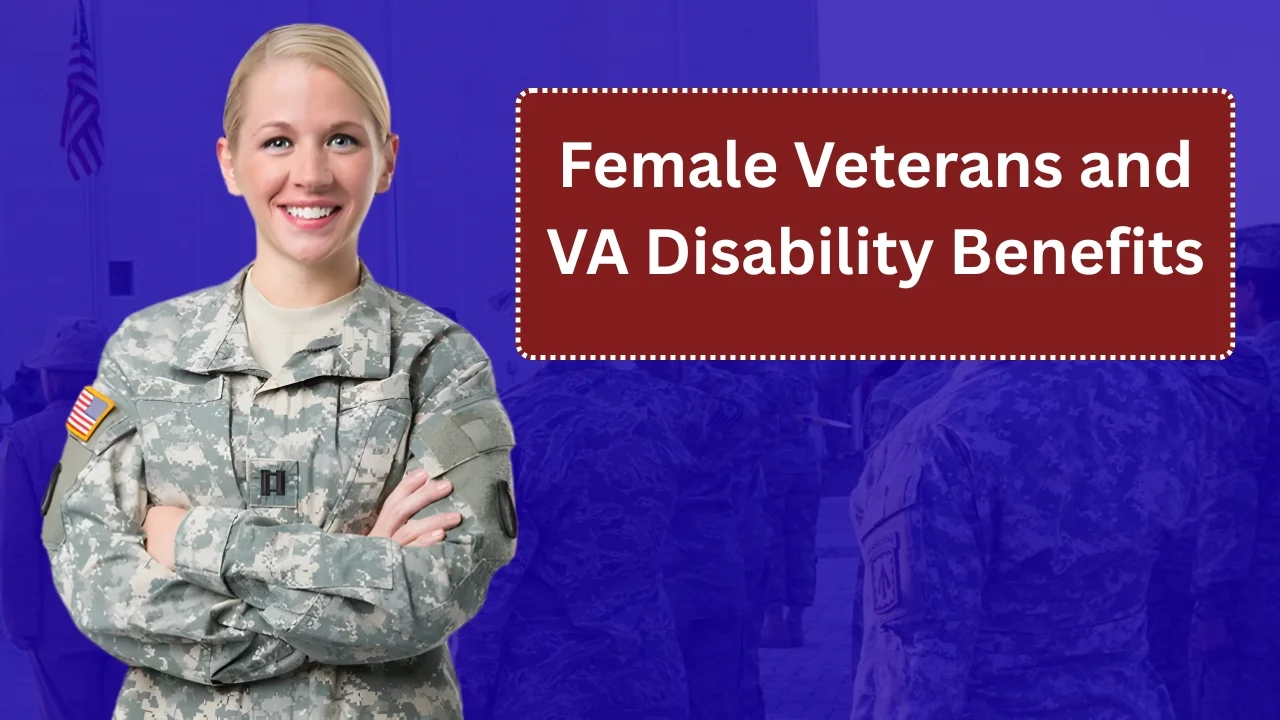
Female veterans are one of the fastest-growing groups in the VA disability system, and they are now receiving higher average VA disability compensation than male veterans. This shift reflects changes in military service roles, improved recognition of women’s injuries, and better processing of complex claims such as Military Sexual Trauma and toxic exposure.

According to the latest data from the Veterans Benefits Administration, 726,091 female veterans currently receive VA disability compensation, with an average annual payment of $27,714. That figure is approximately $2,463 more per year than the average paid to male veterans.
“This trend is not about preference. It is about the VA finally recognizing the full scope of women’s service-connected injuries,” said by a VA disability policy analyst.
Also Read VA COLA Increase 2026: What Veterans Need to Know About the New Cost-of-Living Adjustment
Nearly 29 percent of female veterans are rated 100 percent disabled, a higher proportion than their male counterparts. Understanding why this is happening requires a closer look at the data, the types of conditions women are claiming, and how the VA rating system works in practice.

By the Numbers: Female Veterans in the VA Disability System
Many Americans are surprised to learn that more than 720,000 women veterans are receiving VA disability compensation. Even fewer realize that women now average higher combined VA ratings than men.
Here is a direct comparison based on VBA reporting:

| Metric | Female Veterans | Male Veterans | All Recipients |
|---|---|---|---|
| Total receiving compensation | 726,091 | 5,185,767 | 5,992,967 |
| Percentage of all recipients | 12.1% | 86.5% | 100% |
| Average annual payment | $27,714 | $25,251 | $25,446 |
| New recipients in FY2024 | 57,921 | 386,888 | 457,919 |
Female veterans receive $2,463 more per year on average, which can translate into tens of thousands of dollars over a lifetime.
“The payment difference comes from rating distribution, not special treatment,” explained by a VA actuarial specialist.
Also Read Vietnam Veteran Ron Seibles Honored With 2025 Governor’s Veterans Advocacy Award for Decades of Service in Alaska
VA Rating Distribution: Why Women Skew Toward Higher Ratings?
VA disability ratings range from 0 percent to 100 percent in 10 percent increments. Higher ratings mean significantly higher monthly compensation, with 100 percent ratings exceeding $45,000 annually before dependents or special compensation.
Female veterans are disproportionately represented in the 70 percent to 100 percent rating brackets.
| Combined VA Rating | Female Veterans | Male Veterans | Difference |
|---|---|---|---|
| 100% | 28.82% | 25.56% | +3.26 pts |
| 90% | 12.88% | 10.12% | +2.76 pts |
| 80% | 11.45% | 9.80% | +1.65 pts |
| 70% | 10.58% | 8.93% | +1.65 pts |
| 10% | 8.47% | 15.27% | -6.80 pts |
“Nearly three out of ten female veterans receiving compensation are rated totally disabled,” said by a VA statistical reviewer.
This distribution alone explains most of the compensation gap.
Key Drivers Behind Higher Female VA Compensation
Military Sexual Trauma and Mental Health Claims
Military Sexual Trauma plays a significant role in higher ratings for women. MST-related PTSD is often rated 70 percent or higher, especially when combined with secondary conditions such as depression, anxiety, migraines, or sleep disorders.
“MST claims are now processed with better trauma-informed standards, which leads to more accurate ratings,” explained by a VA mental health adjudicator.
Importantly, MST claims do not require a police report, and the VA accepts behavioral markers as evidence.
Expanded Combat and Deployment Exposure
Post-9/11 conflicts integrated women into combat roles at unprecedented levels. Female veterans from Gulf War and Global War on Terrorism eras show significantly higher average payments, reflecting blast injuries, musculoskeletal damage, and toxic exposures recognized under the PACT Act.
“Women carried the same gear, endured the same blasts, and faced the same environmental hazards,” said by a military health researcher.
More Comprehensive Claims Filing
Female veterans are increasingly filing fully developed claims that include primary, secondary, and gender-specific conditions. This comprehensive approach leads to higher combined ratings.
“Women veterans are more likely to document secondary conditions that were previously overlooked,” explained by a veterans service officer.
Conditions Most Commonly Claimed by Female Veterans
Female veterans are not only receiving higher ratings, but they are also claiming different patterns of disabilities compared to men.
Migraines
Migraines account for 4.3 percent of female service-connected disabilities, nearly double the male rate. Severe migraines can be rated up to 50 percent, significantly increasing monthly compensation.
Gynecological and Reproductive Conditions
More than 216,000 gynecological disabilities are service-connected among female veterans, including endometriosis, ovarian cysts, and hormone-related conditions.
“These conditions were historically under-recognized but are now properly evaluated,” said by a VA women’s health specialist.
Mental Health Conditions
Approximately 455,000 mental health disabilities are claimed by female veterans, including PTSD, major depressive disorder, and anxiety disorders. MST remains a major contributing factor.
Musculoskeletal Injuries
Ill-fitting body armor, helmets, and packs designed for male anatomy have led to higher rates of back, knee, hip, and stress-fracture injuries among women.
“Equipment that does not fit the body causes long-term orthopedic damage,” explained by a military ergonomics expert.
Growth Trajectory: Why the Numbers Will Keep Rising?
In FY2024 alone, 57,921 female veterans entered the VA disability system as new recipients. Women now make up about 18 percent of the active-duty force, a share that continues to grow.
“As more post-9/11 women separate from service, disability claims will continue to rise,” said by a Department of Defense demographic analyst.
With expanded presumptive conditions under the PACT Act, the female veteran population receiving compensation could approach one million in the coming years.
Ongoing Challenges Female Veterans Still Face
Higher compensation reflects progress, but it also highlights ongoing challenges.
Visibility
Female veterans are still frequently misidentified as non-veterans in civilian life and even within VA facilities.
Military Sexual Trauma
Despite improved processing, stigma continues to deter reporting, particularly among older veterans.
Equipment Design
Legacy equipment standards continue to affect long-term health outcomes for women veterans.
“Recognition does not erase the cost, but it validates the experience,” said by a women veterans advocacy leader.
What Higher Compensation Really Represents?
Higher average VA payments for women mean:
- Disabilities are more severe or more completely documented
- Gender-specific conditions are finally acknowledged
- Secondary conditions are properly rated
- The cumulative toll of service is being recognized
This is not an advantage. It is delayed recognition.
Final Thought
Female veterans now represent one of the most accurately rated groups in the VA disability system. Their higher compensation reflects years of service, exposure, trauma, and physical strain that were historically minimized or ignored.
“The data shows progress, but it also tells a story of long-overdue accountability,” explained by a VA policy historian.
If you are a female veteran, your service matters, your injuries are valid, and your benefits exist to support your recovery. The VA cannot recognize what is never claimed, but the system is finally listening.
FAQs
Do female veterans really receive higher VA disability pay than men?
Yes. Female veterans average $27,714 annually compared to $25,251 for male veterans due to higher rating distribution.
Does PTSD and Military Sexual Trauma affect compensation levels?
Yes. MST-related PTSD often results in ratings of 70 percent to 100 percent, significantly increasing compensation.
Can female veterans claim injuries from ill-fitting equipment?
Yes. Musculoskeletal injuries caused by poorly fitted gear are fully service-connectable.
Why are more female veterans filing claims now?
Expanded outreach, improved MST processing, PACT Act presumptions, and post-9/11 separations are key drivers.