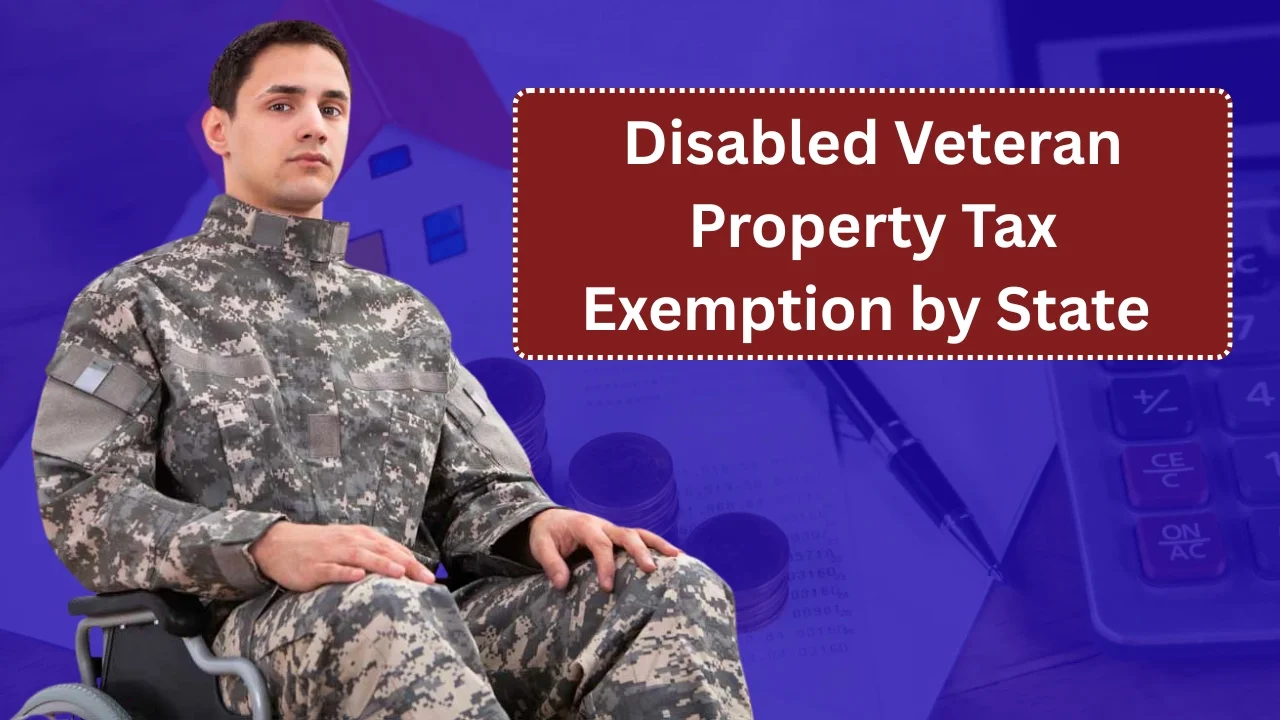
For many disabled veterans, property taxes can quietly become one of the largest recurring expenses in retirement or post-service life. The good news is that every U.S. state and the District of Columbia offers some form of property tax relief for disabled veterans, and in many cases, the savings can reach thousands of dollars each year.
In this 2026 update, VA disability expert Brian Reese explains how disabled veteran property tax exemptions work, who qualifies, and why understanding your state’s rules is essential before you apply. While the benefit exists nationwide, the eligibility requirements, exemption amounts, and application processes vary widely depending on where you live.
“Property tax relief is one of the most overlooked veteran benefits,” explained Brian Reese, VA Claims Insider founder. “In some states, a 100 percent permanent and total VA rating can eliminate your property taxes entirely, but only if you apply correctly and on time.”
Also Read VA COLA Increase 2026: What Veterans Need to Know About the New Cost-of-Living Adjustment
How Disabled Veteran Property Tax Exemptions Work?
Most property tax exemptions for disabled veterans are tied to three key factors:

- Your VA disability rating, often requiring 100 percent Permanent and Total (P&T) for full exemptions
- Your primary residence status, usually limited to a homestead
- State and local administration rules, which control deadlines, documentation, and approval
Some states provide full exemptions, others offer partial exemptions, assessed value reductions, credits, or refunds, and a few rely on income-based programs.

“Veterans are often surprised to learn that two neighbors with the same VA rating can receive completely different benefits simply because they live in different states,” said Reese. “That’s why state-specific guidance matters.”

Overview: Disabled Veteran Property Tax Benefits by State 2026
| Benefit Type | States Commonly Offering It | Typical VA Rating Required |
|---|---|---|
| Full Property Tax Exemption | TX, FL, VA, NJ, MI, MD, MS | 100% P&T or IU paid at 100% |
| Partial Exemption / Value Reduction | CA, MN, NV, IL, AZ | 50%–100% depending on state |
| Property Tax Credit / Refund | WI, MO, KS, WV | Usually 90%–100% or income-based |
| Income-Based Relief Programs | PA, MT, WA, RI | Rating + financial need |
| County-Administered Exemptions | HI, NY, NH, VT | Local adoption required |
“This table gives veterans a quick snapshot,” Brian Reese said, “but always confirm details with your county assessor because local rules can override state-level expectations.”
States With the Most Generous Benefits
Several states stand out in 2026 for offering near-total or total property tax relief for disabled veterans:
- Texas fully exempts the homestead for veterans rated 100% or paid at 100% due to IU
- Florida grants a total homestead exemption for veterans with total and permanent service-connected disabilities
- Virginia removes property taxes on the principal residence and up to one acre for 100% P&T veterans
- New Jersey and Michigan offer full exemptions for qualifying 100% disabled veterans
“In states like Texas and Florida, qualifying veterans can literally eliminate their property tax bill,” Reese noted. “That’s life-changing relief, especially for fixed-income households.”
States With Partial or Tiered Exemptions
Many states scale benefits based on disability percentage:
- California offers two exemption tiers, including a higher benefit for low-income disabled veterans
- Minnesota excludes up to $300,000 of home value for 100% P&T veterans
- Nevada provides assessed value exemptions that increase with disability rating
- Illinois exempts up to $250,000 of assessed value for veterans rated 70% or higher
“Partial exemptions still matter,” said Reese. “Even a few thousand dollars off your assessed value can translate into real annual savings.”
Income-Based and Credit Programs
Some states use refunds or credits instead of exemptions, often tied to household income:
- Wisconsin refunds 100 percent of property taxes paid for eligible 100% disabled veterans
- Kansas and Missouri use refund or circuit breaker programs with income caps
- Pennsylvania requires financial need, even with a 100% rating
“Income-based programs frustrate some veterans,” Reese explained, “but they’re still worth exploring, especially if your tax burden is high relative to income.”
How to Apply for a Disabled Veteran Property Tax Exemption?
While application rules vary, most states require:
- Proof of VA disability rating (award letter showing P&T or IU status)
- Proof the property is your primary residence
- A completed county or municipal application form
- Filing before the local deadline, often early in the tax year
“Missing the deadline is the number one reason veterans lose this benefit,” Brian Reese said. “Put reminders on your calendar and follow up with your assessor’s office.”
Common Mistakes Veterans Make
Veterans often assume the exemption is automatic once they receive a 100% VA rating. It is not.
Other common errors include:
- Applying at the state level instead of the county
- Forgetting to reapply when required
- Not updating records after a rating increase
- Assuming renters or second homes qualify
“This benefit rewards persistence,” Reese emphasized. “Ask questions, keep copies, and don’t be afraid to follow up.”
Why Confirming Local Rules Matters?
Even within the same state, counties and municipalities may interpret rules differently. Some localities impose minimum taxes, special assessments, or income thresholds not obvious in state summaries.
“Always confirm details locally,” Reese advised. “Your county assessor is the final authority on how much you’ll actually save.”
Final Thought
Disabled veteran property tax exemptions remain one of the most valuable yet underused benefits available in 2026. Whether your state offers a full exemption, partial reduction, or refundable credit, the savings can significantly improve long-term financial stability.
“Veterans earned these benefits through service,” Brian Reese said. “Understanding your state’s rules is the key to actually receiving them.”
FAQs
Do I need a 100% VA rating to qualify?
Not always. Some states offer partial benefits starting at 10%, 50%, or 70% disability.
Does IU count the same as a 100% rating?
In many states, yes, if you are paid at the 100% rate. Always verify locally.
Is the exemption automatic once approved?
Some states require annual renewal, while others grant it permanently.
Can surviving spouses qualify?
Yes, many states extend benefits to eligible unremarried surviving spouses.
Does this apply to rental or vacation homes?
No. Most programs apply only to a primary residence or homestead.