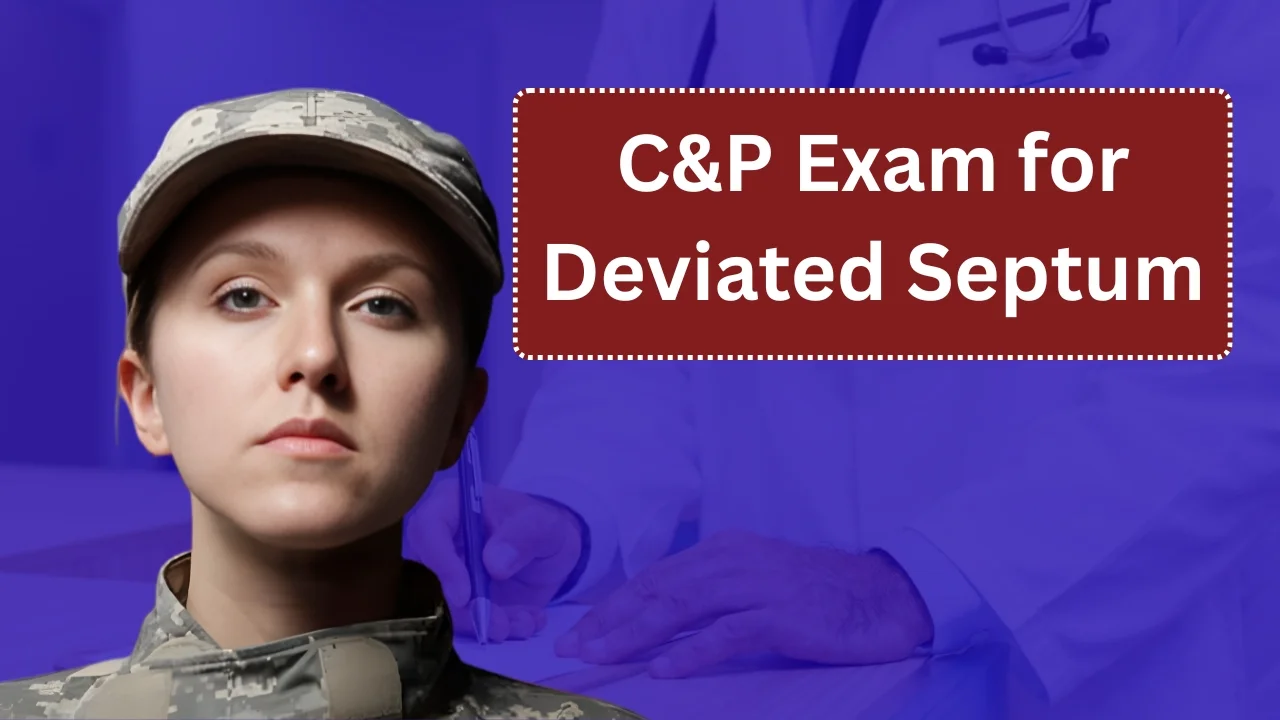
After filing a VA claim for a deviated septum, you are likely to be scheduled for a Compensation and Pension (C&P) exam. This specialized exam aims to assess the severity of your condition and establish a potential service connection between your deviated septum and military service.

Pro Tip: The VA rates a deviated septum under Diagnostic Code (DC) 6502, which falls under respiratory system disabilities. The VA assigns a 10% rating if the deviated septum is considered “traumatic,” meaning it obstructs nasal airflow. Specifically, a 10% disability rating is granted if there is at least 50% obstruction of the nasal passages on both sides, or complete obstruction of the nasal cavity on one side.
Main Objectives of the C&P Exam for Deviated Septum
The C&P exam for a deviated septum primarily focuses on three key elements:

1. Diagnosis Confirmation
The examiner will confirm whether the veteran has a diagnosed deviated septum.
2. Service Connection
The examiner will determine whether the deviated septum is connected to military service, based on the type of claim filed (e.g., new claim, secondary claim, or aggravation claim).

3. Severity of Symptoms Assessment
The examiner will assess the extent of nasal obstruction, breathing difficulties, and how these symptoms impact your daily activities and quality of life.
What to Expect During the C&P Exam for Deviated Septum?
The C&P exam for a deviated septum can be conducted in-person, via telehealth, or through a records-only review (called an ACE exam). For a deviated septum, a face-to-face examination is typically required. Here’s what you can expect during the exam:

| Step | What to Expect |
|---|---|
| 1. Interview and Questionnaire | Expect questions about your symptoms, medical history, and any treatments you’ve undergone. |
| 2. Physical Examination | The examiner will inspect your nasal structure for deviations and check for related conditions like sinusitis. |
| 3. Breathing Assessment | Functionality tests will be performed to evaluate the extent of obstruction caused by the deviated septum. |
| 4. Documentation | The examiner will complete a DBQ for sinusitis/rhinitis and related conditions, including deviated nasal septum. |
Potential Service-Connected Causes of a Deviated Septum
A deviated septum in veterans can be influenced by various service-related causes. Understanding these potential causes is crucial in establishing a service connection for your condition. Here are some possible service-related causes:
1. Physical Trauma
- Combat Injuries: Combat exposure often leads to blasts, falls, or vehicular accidents causing facial injuries.
- Training Accidents: Military training exercises, such as hand-to-hand combat drills or parachute jumps, can result in facial injuries affecting the nasal septum.

2. Environmental Exposures
- Extreme Weather Conditions: Service in extreme climates (e.g., cold Arctic stations) can lead to frostbite or damage due to dry air inhalation.
- Exposure to Pollutants: Deployment in areas with air pollution (e.g., burn pits or industrial areas) can irritate and inflame the nasal passages, potentially worsening a deviated septum.
3. Occupational Hazards
- Mechanical Trauma: Heavy machinery use can result in facial injuries, including damage to the nasal septum.
- Exposure to Chemicals: Handling toxic chemicals, solvents, or other harsh substances can damage the nasal passages.
“Service-related injuries, including combat injuries and training accidents, are common contributors to deviated septums in veterans,” explained by Dr. Sarah Williams, VA Disability Specialist.
What Other Conditions Can Be Caused or Made Worse by a Deviated Septum?
Although the focus is on the deviated septum, other conditions can develop or worsen due to its obstruction of the nasal passages. These include:
- Sinusitis: A deviated septum can block nasal passages, leading to chronic inflammation and infection of the sinuses.
- Nasal Congestion: Obstruction of one or both nasal passages can cause chronic congestion and affect breathing.
- Nosebleeds: The lack of airflow can dry out the nasal membranes, leading to frequent nosebleeds.
- Sleep Disorders: Difficulty breathing at night can cause snoring or contribute to sleep apnea, which impacts sleep quality.
- Facial Pain: Difficulty breathing through obstructed passages can cause facial muscle strain, sometimes leading to headaches.
- Postnasal Drip: A deviated septum can cause mucus buildup, leading to throat irritation and coughing.
“A deviated septum often leads to a range of secondary conditions, from sinus infections to sleep disturbances, all of which can affect a veteran’s overall health,” explained by Dr. John Matthews, VA Medical Officer.
What Questions Will I Be Asked for the Deviated Septum C&P Exam?
During your C&P exam, you can expect a series of questions that are designed to assess the severity and impact of your deviated septum. Here are some examples of what might be asked:
1. Initial Confirmation:
- “Do you currently have or have you ever been diagnosed with a deviated nasal septum?”
2. Details of Diagnosis:
- “When were you first diagnosed with a deviated septum?”
- “What was the cause of the deviation was it traumatic or congenital?”
3. Severity of Symptoms Assessment:
- “Do you experience any breathing difficulties due to the deviated septum?”
- “Is there at least 50% obstruction of the nasal passage on both sides?”
- “Do you have complete obstruction of the nasal passage on either side?”
4. Impact on Daily Life/Activities:
- “How does the deviated septum affect your daily activities and quality of life?”
- “Do you experience frequent nosebleeds, sinus infections, or other complications due to the deviated septum?”
5. Medical Treatment History:
- “Have you undergone any treatments for your deviated septum, such as medications or surgery?”
- “If you’ve had surgery, what type of surgery was it (e.g., septoplasty) and when did it occur?”
How to Prepare for the Exam?
To ensure you’re well-prepared for your C&P exam for the nose, throat, and deviated septum, follow these steps:
1. Gather Records and Documents
Assemble relevant medical records, including diagnosis reports, treatment history, and any correspondence related to your deviated septum. Review your records thoroughly and bring hard copies to the C&P exam for reference.
2. Create a Symptoms Diary
Maintain a detailed log of your symptoms, noting their frequency, severity, and how they affect your breathing. Document any related issues like nasal congestion, snoring, or recurrent sinus infections. This diary will help you clearly communicate the impact of your deviated septum during the exam.
3. List Functional Impacts
Compile a list of ways in which the deviated septum affects your ability to perform daily activities. For instance, if it affects your sleep, work, or physical activity, include specific examples to strengthen your case.
4. Review the DBQ for Conditions of the Nose
Familiarize yourself with the Disability Benefits Questionnaire (DBQ) for conditions of the nose, as it will be used during your exam. Be ready to discuss the history of your condition and the treatments you have undergone.
“Veterans should focus on documenting the functional impacts of their condition. Breathing difficulties at night or the inability to perform certain tasks due to the deviated septum can play a significant role in the outcome of your claim,” explained by Veteran Disability Attorney, Mark Thompson.
Final Thought
The C&P exam for a deviated septum is an essential part of the VA disability process, as it helps determine the severity, service connection, and impact of the condition on your life. Being well-prepared for your exam will ensure that your claim is processed efficiently and accurately.
“Preparation is key. Providing detailed symptom logs, relevant medical records, and service records can make a big difference in securing the right VA disability rating for your deviated septum,” explained by VA Claims Advisor, Lisa Grayson.
FAQs
What should I bring to my C&P exam for deviated septum?
Medical records, symptom logs, and any diagnostic tests (e.g., MRIs, CT scans) related to your deviated septum.
How is a deviated septum rated by the VA?
The VA assigns a 10% rating if there is 50% obstruction of both nasal passages or complete obstruction on one side.
Can a deviated septum be service-connected?
Yes, if the condition is related to combat injuries, training accidents, or environmental exposures during military service.
What is the highest rating I can receive for a deviated septum?
The highest possible rating is 10% for traumatic deviated septum causing significant obstruction.
Can the C&P exam for deviated septum be done remotely?
Yes, it may be done via telehealth or records-only review (ACE exam), but an in-person exam is typically required for a deviated septum.