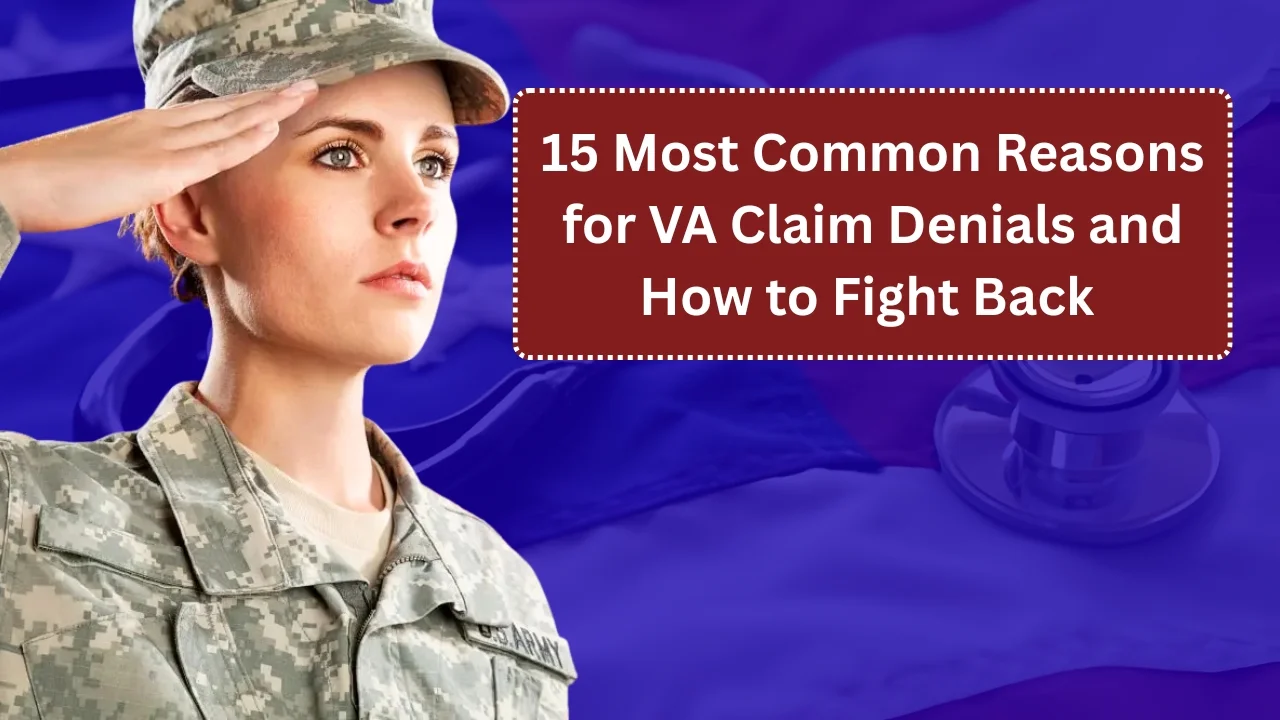
Receiving a VA disability claim denial can feel like a gut punch. Many veterans describe the experience as frustrating, confusing, and discouraging especially when they know their condition is real and connected to service.
What most veterans don’t realize is that VA claim denials are extremely common, and in many cases, they are fixable. A denial does not mean the VA thinks you are lying or undeserving. More often, it means something was missing, unclear, or improperly evaluated.
“The VA doesn’t deny claims because veterans don’t deserve benefits it denies them because evidence wasn’t presented the right way,” said by Brian Reese, VA disability expert.
Also Read VA COLA Increase 2026: What Veterans Need to Know About the New Cost-of-Living Adjustment
This guide explains the 15 most common reasons the VA denies disability claims and gives clear, legal strategies to fight back and turn a denial into an approval with the U.S. Department of Veterans Affairs.
What Is a VA Claim Denial?
A VA claim denial occurs when the VA determines that the evidence does not meet legal requirements for service connection, severity, or compensation.
Denials typically happen due to:

- Missing medical evidence
- Weak service connection
- Procedural mistakes
- VA examiner errors
Understanding why your claim was denied is the first step to fixing it.

Top 15 Reasons the VA Denies Disability Claims (And How to Fight Back)
1. No Current Medical Diagnosis
Why it happens:
The VA requires a current diagnosis from a licensed medical provider. Symptoms alone are not enough.
How to fight back:
Get a documented diagnosis in your medical records and submit it with a Supplemental Claim.
2. No Medical Nexus to Military Service
Why it happens:
The VA did not see a clear link between your condition and service.
How to fight back:
Submit a strong nexus letter explaining how service caused or aggravated the condition.
“A claim without a nexus is legally incomplete,” explained by Brian Reese.
3. No Evidence of Severity
Why it happens:
The VA could not determine how severe your symptoms are.
How to fight back:
Submit lay statements and medical notes describing how symptoms affect work, life, and relationships.
4. Insufficient Medical Evidence
Why it happens:
Medical records were incomplete, outdated, or vague.
How to fight back:
Submit full treatment history from VA and private doctors showing progression and impact.
5. Missed C&P Exam
Why it happens:
You missed a scheduled Compensation & Pension exam.
How to fight back:
Call the VA immediately and request a rescheduled exam or file a Supplemental Claim explaining good cause.
6. Pre-Existing Condition Without Aggravation Proof
Why it happens:
The VA believes the condition existed before service and did not worsen.
How to fight back:
Submit before-and-after medical evidence proving aggravation during service.
7. Condition Not Recognized as a VA Disability
Why it happens:
The condition did not meet VA standards for compensation.
How to fight back:
Reference the VA Schedule for Rating Disabilities and show functional impairment.
8. Weak Secondary Service Connection
Why it happens:
The VA did not see proof that a service-connected condition caused the secondary condition.
How to fight back:
Submit a medical opinion clearly linking the primary and secondary conditions.
9. Symptoms Do Not Meet Rating Criteria
Why it happens:
The VA acknowledged the condition but rated it at 0%.
How to fight back:
Submit evidence showing symptoms meet higher rating thresholds.
10. Gap After Discharge (No Continuity of Symptoms)
Why it happens:
Too much time passed with no documented treatment.
How to fight back:
Submit lay statements and records showing continuous symptoms since service.
11. No Valid Theory of Service Connection
Why it happens:
The claim lacked a clear service-connection strategy.
How to fight back:
Identify whether your claim is direct, secondary, presumptive, aggravation-based, or due to exposure.
12. Missing or Incomplete Claim Information
Why it happens:
Forms were incomplete or evidence missing.
How to fight back:
File a Supplemental Claim correcting errors and adding missing documents.
13. Missed VA Deadlines
Why it happens:
Appeal or evidence deadlines were missed.
How to fight back:
File a new claim or Supplemental Claim with updated evidence.
14. Bad C&P Exam
Why it happens:
The examiner gave an unfavorable or inaccurate opinion.
How to fight back:
Challenge the exam and submit contrary medical evidence or request a new exam.
“Bad exams are one of the biggest reasons valid claims fail,” said by Brian Reese.
15. Inconsistencies in Records
Why it happens:
Statements, service records, and medical records didn’t align.
How to fight back:
Explain discrepancies clearly with supporting documentation.
Action Steps After a VA Claim Denial
Step 1: Review Your VA Rating Decision Letter
This letter explains why the VA denied your claim and what evidence they relied on.
“It’s the most important document in the entire VA process,” explained by Brian Reese.
Step 2: Choose the Right Appeal Option
| Appeal Type | Best For |
|---|---|
| Higher-Level Review | VA errors or bad exams |
| Supplemental Claim | New medical evidence |
| Board Appeal | Legal review |
Step 3: Review and Strengthen Medical Evidence
Confirm you have:
- A diagnosis
- A nexus
- Evidence of severity
If anything is missing, file a Supplemental Claim.
Step 4: File Your Appeal Online
Submit your appeal promptly and track deadlines carefully.
“The VA process isn’t over unless you quit,” said by Brian Reese.
Why This Matters?
Most denied VA claims are not lost they are unfinished. Veterans who understand denial reasons and respond strategically often win benefits they were initially denied.
Persistence, evidence, and the right appeal strategy make all the difference.
FAQs
Is a VA denial permanent?
No. Most denials can be appealed or refiled.
What is the most common reason for denial?
Missing nexus or diagnosis.
Can I submit new evidence after denial?
Yes, with a Supplemental Claim.
How long do VA appeals take?
Varies by appeal type and evidence.
Should I give up after denial?
No. Many approvals happen on appeal.