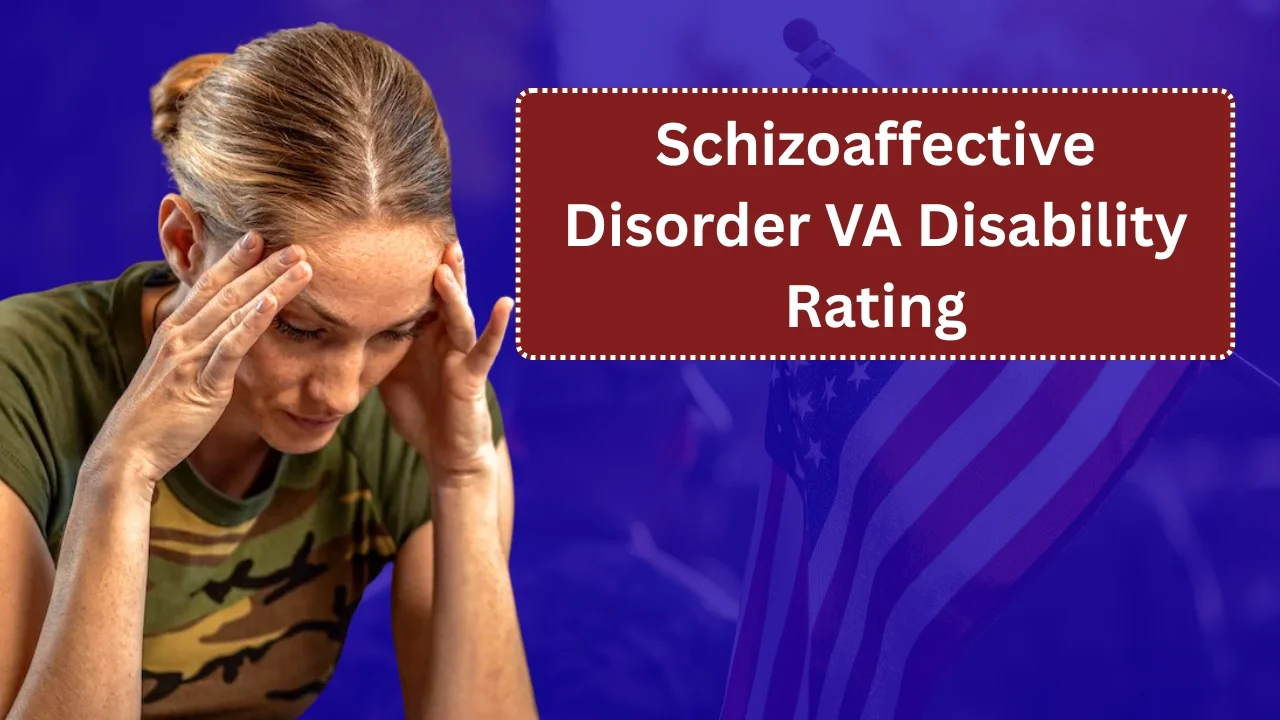
Getting a schizoaffective disorder VA rating can feel overwhelming, but it is absolutely possible to win service connection with the right evidence and strategy.
Schizoaffective disorder is a serious mental health condition that combines symptoms of schizophrenia with either bipolar disorder or major depressive disorder. When this condition is connected to your military service, either directly or secondarily, it can qualify for significant VA disability compensation, including ratings as high as 100 percent or even TDIU if you cannot work.
“Mental health claims often succeed when veterans clearly show how symptoms began during service or worsened because of service-related stressors,” said by a VA-accredited mental health examiner.
Also Read Schizoaffective Disorder VA Ratings: How to Prove Service Connection and Get the Benefits You Deserve
Below is a complete guide to how the VA rates schizoaffective disorder, how to prove service connection, and how to maximize your benefits.

What Is Schizoaffective Disorder?
Schizoaffective disorder is a chronic mental health condition that includes symptoms of psychosis along with major mood disturbances.
To understand it fully, it helps to start with schizophrenia. According to the Diagnostic and Statistical Manual of Mental Disorders (DSM-5), schizophrenia symptoms include:

- Delusions
- Hallucinations
- Disorganized speech
- Disorganized behavior or social withdrawal
- Negative symptoms such as emotional flatness or lack of motivation
Schizoaffective disorder occurs when these psychotic symptoms overlap with a mood disorder.

Types of Schizoaffective Disorder
Bipolar Type
This includes symptoms of schizophrenia plus episodes of:
- Mania or hypomania
- Depression
Depressive Type
This includes symptoms of schizophrenia plus:
- Major depressive episodes
“Schizoaffective disorder is often misdiagnosed for years because its symptoms overlap with multiple conditions,” explained by a licensed clinical psychologist.
Schizoaffective Disorder VA Rating Criteria
The VA rates schizoaffective disorder under Diagnostic Code 9211, using the General Rating Formula for Mental Disorders. Ratings range from 0 percent to 100 percent, based on how severely the condition affects occupational and social functioning.
Schizoaffective Disorder VA Rating
| VA Rating | Criteria Summary |
|---|---|
| 100% | Total occupational and social impairment, including persistent hallucinations, danger to self or others, inability to perform daily activities, severe memory loss |
| 70% | Deficiencies in most areas such as work, judgment, mood, or family relations, including suicidal ideation, near-continuous depression, impaired impulse control |
| 50% | Reduced reliability and productivity, including panic attacks, impaired judgment, memory problems, difficulty maintaining relationships |
| 30% | Occasional decrease in work efficiency with symptoms like anxiety, chronic sleep impairment, mild memory loss |
| 10% | Mild or transient symptoms controlled by medication |
| 0% | Diagnosis present but no functional impairment |
“VA ratings focus on functional impact, not just diagnosis labels,” said by a VA rating specialist.
How to Prove Service Connection for Schizoaffective Disorder?
To receive VA compensation, you must establish service connection. Even if you were not formally diagnosed during service, you can still win your claim by showing early warning signs.
Direct Service Connection Requirements
The VA uses the Caluza Triangle, which requires:
- A current medical diagnosis of schizoaffective disorder
- Evidence of an in-service event, injury, illness, or aggravation
- A medical nexus linking the condition to service
Early in-service indicators may include:
- Behavioral changes
- Social isolation
- Mood instability
- Decline in hygiene or work performance
- Disciplinary issues or sudden anxiety
“Behavioral markers during service can be just as important as formal diagnoses,” said by a VA clinical reviewer.
Secondary Service Connection for Schizoaffective Disorder
Schizoaffective disorder can also be claimed secondary to another service-connected condition.
Common primary conditions include:
- PTSD
- Traumatic brain injury (TBI)
- Chronic pain conditions
- Severe sleep disorders
To win a secondary claim, medical evidence must show that the service-connected condition caused or aggravated schizoaffective disorder.
“Secondary mental health claims are increasingly successful when supported by clear medical opinions,” explained by a VA disability attorney.
Medical Evidence That Strengthens Your Claim
Strong evidence is critical. Helpful documentation includes:
- A current diagnosis from a licensed psychiatrist or psychologist
- VA or private treatment records showing symptom history
- A medical nexus opinion linking symptoms to service
- Lay statements from family, coworkers, or friends
- Documentation of behavioral changes during or shortly after service
If you are not yet diagnosed, do not panic. Schizoaffective disorder often takes time to diagnose because providers must rule out schizophrenia, bipolar disorder, and major depression first.
“Delayed diagnosis does not weaken a claim when symptom history is well documented,” said by a VA mental health consultant.
How to File a VA Claim for Schizoaffective Disorder?
Once you have your evidence, you can file your claim.
Items That Strengthen Your Claim
- Service records
- Medical diagnoses and treatment notes
- Nexus letters
- Psychological evaluations
Claims can be filed:
- Online
- By mail or fax
- In person at a VA regional office
You will need VA Form 21-526EZ if filing by mail or in person.
Schizoaffective Disorder and Other Mental Health Conditions
Schizoaffective disorder often appears alongside other mental health conditions.
Common comorbidities include:
- PTSD
- Anxiety disorders
- ADHD
- Substance use disorders
The VA does not pay separate ratings for overlapping symptoms. However, separate ratings are possible if symptoms are clearly distinct.
“The VA combines psychiatric symptoms into a single rating unless symptoms are clearly separate,” explained by a VA rater.
TDIU for Schizoaffective Disorder
If schizoaffective disorder prevents you from working, you may qualify for Total Disability Based on Individual Unemployability (TDIU).
TDIU Eligibility Requirements
You may qualify if:
- One service-connected disability is rated at least 60 percent
OR - A combined rating of 70 percent with one condition rated at least 40 percent
TDIU pays at the 100 percent VA compensation rate, even if your schedular rating is lower.
“TDIU is often appropriate for severe mental health conditions with fluctuating symptoms,” said by a VA vocational expert.
Final Thought
Schizoaffective disorder can severely impact your ability to work, maintain relationships, and function independently. The VA recognizes this condition as fully ratable, with compensation up to 100 percent when symptoms are severe.
“Mental health conditions linked to service deserve the same recognition as physical injuries,” said by a VA mental health advocate.
If you believe your symptoms are connected to military service, do not give up. With the right medical evidence, service connection is achievable.
FAQs
Is schizoaffective disorder a VA disability?
Yes. It is rated under Diagnostic Code 9211 from 0 percent to 100 percent.
Can schizoaffective disorder be service-connected?
Yes, through direct or secondary service connection with proper medical evidence.
Can I join the military with schizoaffective disorder?
No. It is considered a disqualifying condition, and waivers are no longer accepted.
What is the average VA rating for mental health conditions?
The average rating is 70 percent, reflecting severe functional impairment.