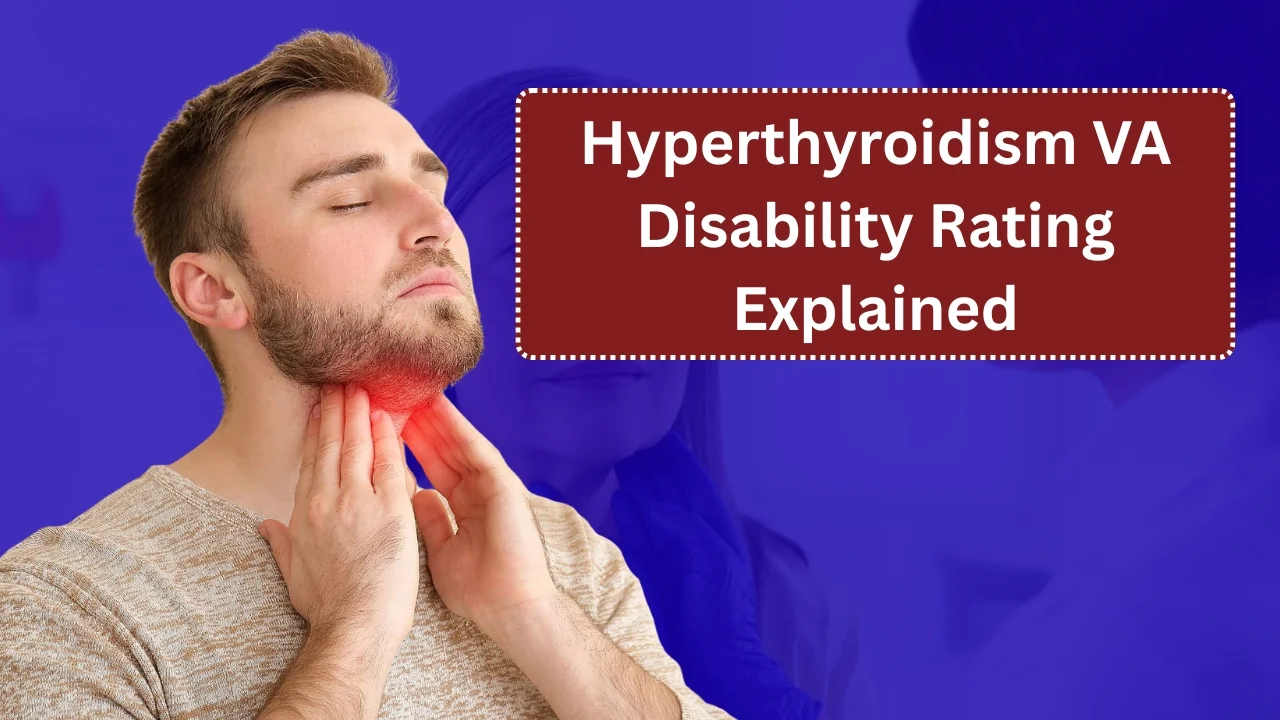
If you’re a veteran struggling with the debilitating effects of an overactive thyroid, you’re not alone. Hyperthyroidism affects millions, causing everything from rapid heartbeats and unexplained weight loss to anxiety and chronic fatigue that can interfere with daily life and employment.

Understanding the hyperthyroidism VA rating is critical to securing the disability compensation and healthcare benefits you’ve earned through service.
“Many veterans are under-rated for thyroid conditions because they don’t understand how the VA evaluates residual symptoms,” said by Brian Reese, VA disability expert and founder of VA Claims Insider.
Also Read VA COLA Increase 2026: What Veterans Need to Know About the New Cost-of-Living Adjustment
In this guide, you’ll learn how the VA rates hyperthyroidism, how to prove service connection, and strategies to strengthen your VA claim, whether you’re filing for the first time or appealing a decision.
What Is Hyperthyroidism?
The thyroid is a small, butterfly-shaped gland located at the base of your neck. It plays a central role in regulating metabolism by producing hormones such as thyroxine (T4) and triiodothyronine (T3), which influence heart rate, body temperature, digestion, and energy levels.
Hyperthyroidism, also known as an overactive thyroid, occurs when the thyroid gland produces excessive thyroid hormones, causing the body’s systems to run at an accelerated pace.

“When thyroid hormone levels are too high, nearly every organ system can be affected,” explains endocrinology guidance commonly cited by VA examiners.

Causes of Hyperthyroidism
Common Medical Causes
The most frequent causes of hyperthyroidism include:
- Graves’ disease (autoimmune disorder)
- Thyroid nodules producing excess hormones
- Thyroid inflammation (thyroiditis)
- Excessive iodine intake (medications or contrast dyes)
Military-Related Risk Factors
For veterans, potential contributors may include:
- Chronic physical and psychological stress
- Environmental or chemical exposures
- Medication reactions during service
“Service-related stressors and environmental exposures can disrupt endocrine function, but a medical nexus is essential,” said by Brian Reese.
Signs and Symptoms of Hyperthyroidism
Hyperthyroidism symptoms vary in severity but often worsen over time if untreated.
Common Symptoms Include:
- Unintentional weight loss
- Rapid heartbeat (tachycardia)
- Irregular heartbeat or palpitations
- Anxiety, nervousness, or irritability
- Hand tremors
- Heat intolerance and excessive sweating
- Sleep disturbances and fatigue
- Muscle weakness
- Enlarged thyroid (goiter)
- Vision changes (Graves’ ophthalmopathy)
“Veterans often focus on the diagnosis itself, but the VA actually rates the functional impact of symptoms,” explains Reese.
How the VA Rates Hyperthyroidism?
Hyperthyroidism is evaluated under 38 CFR § 4.119 – Schedule of Ratings, Endocrine System, Diagnostic Code (DC) 7900.
Initial Rating
- 30% VA rating for six months following initial diagnosis
Ratings After Six Months
After the initial six-month period, the VA rates residual symptoms, not the thyroid condition alone.
Hyperthyroidism VA Rating
| Rating | VA Criteria (DC 7900 & Residuals) |
|---|---|
| 100% | Thyrotoxicosis with severe symptoms (e.g., heart involvement, significant weight loss, mental disturbance) |
| 60% | Severe residuals affecting multiple systems |
| 30% | Active disease or moderate residual symptoms |
| 10% | Intermittent tachycardia or medication-controlled symptoms |
| 0% | Diagnosis with no compensable residuals |
“Many veterans lose compensation after six months because they fail to document residual conditions,” said by Reese.
Proving Service Connection for Hyperthyroidism
There are two main paths to VA service connection: direct and secondary.
Direct Service Connection
To establish direct service connection, you must show:
Required Evidence
- A current medical diagnosis
- An in-service event, illness, or exposure
- A medical nexus linking service to the condition
“Without a clear nexus opinion, even strong medical records can be denied,” explains Reese.
Secondary Service Connection
Hyperthyroidism may also qualify as a secondary condition if it was caused or aggravated by another service-connected disability.
Common Primary Conditions Linked by Veterans
- PTSD and chronic stress disorders
- Other endocrine or autoimmune disorders
Required Evidence
- Current diagnosis of hyperthyroidism
- Existing service-connected primary condition
- Medical nexus showing causation or aggravation
“A well-written nexus letter using ‘at least as likely as not’ language is often decisive,” said by Reese.
Is Hyperthyroidism a Presumptive VA Condition?
No. Hyperthyroidism is not currently listed as a VA presumptive condition.
Related Presumptive Thyroid Conditions
- Hypothyroidism – presumptive for Agent Orange exposure (Vietnam-era)
- Thyroid cancer – presumptive for radiation exposure and burn pits
“Hyperthyroidism claims require evidence there’s no automatic approval,” explains Reese.
Secondary Conditions Caused by Hyperthyroidism
Hyperthyroidism frequently leads to secondary disabilities, which may be rated separately.
Common Secondary Conditions
Cardiovascular Conditions
- Tachycardia
- Arrhythmias
- Hyperthyroid heart disease (DC 7008)
Eye and Vision Conditions
- Graves’ ophthalmopathy
- Diplopia (double vision) rated under § 4.79
Thyroid Enlargement
- Toxic or nontoxic goiter
- Breathing or swallowing difficulty
- Disfigurement of the neck
“Secondary conditions are where many veterans reach higher combined ratings,” said by Reese.
Claim Strategy Tips for Veterans
Strengthen Your Hyperthyroidism VA Claim
- Submit endocrinology records
- Document cardiac and eye residuals
- Obtain a medical nexus letter
- File secondary claims where appropriate
- Track symptoms over time
“The VA rates what you prove, not what you feel,” explains Reese.
Final Thought
A hyperthyroidism VA claim can be complex, but understanding the rating criteria, service-connection rules, and secondary conditions can dramatically improve your outcome.
“Veterans deserve ratings that reflect real-world limitations not just lab results,” said by Brian Reese.
With the right evidence, medical opinions, and strategy, you can secure the compensation and healthcare benefits your service has earned.
FAQs
What is the VA disability rating for hyperthyroidism?
The VA assigns 30% for six months after diagnosis, then rates residual symptoms under DC 7900 and related diagnostic codes.
Can military service cause hyperthyroidism?
Service-related stress or exposures may contribute, but a medical nexus is required.
Can PTSD cause hyperthyroidism?
PTSD does not directly cause it, but chronic stress may aggravate autoimmune thyroid conditions with proper medical evidence.
Is hyperthyroidism a presumptive VA condition?
No. You must prove direct or secondary service connection.
Can I get separate ratings for hyperthyroidism complications?
Yes. Heart disease, eye disorders, and thyroid enlargement may qualify as secondary ratings.