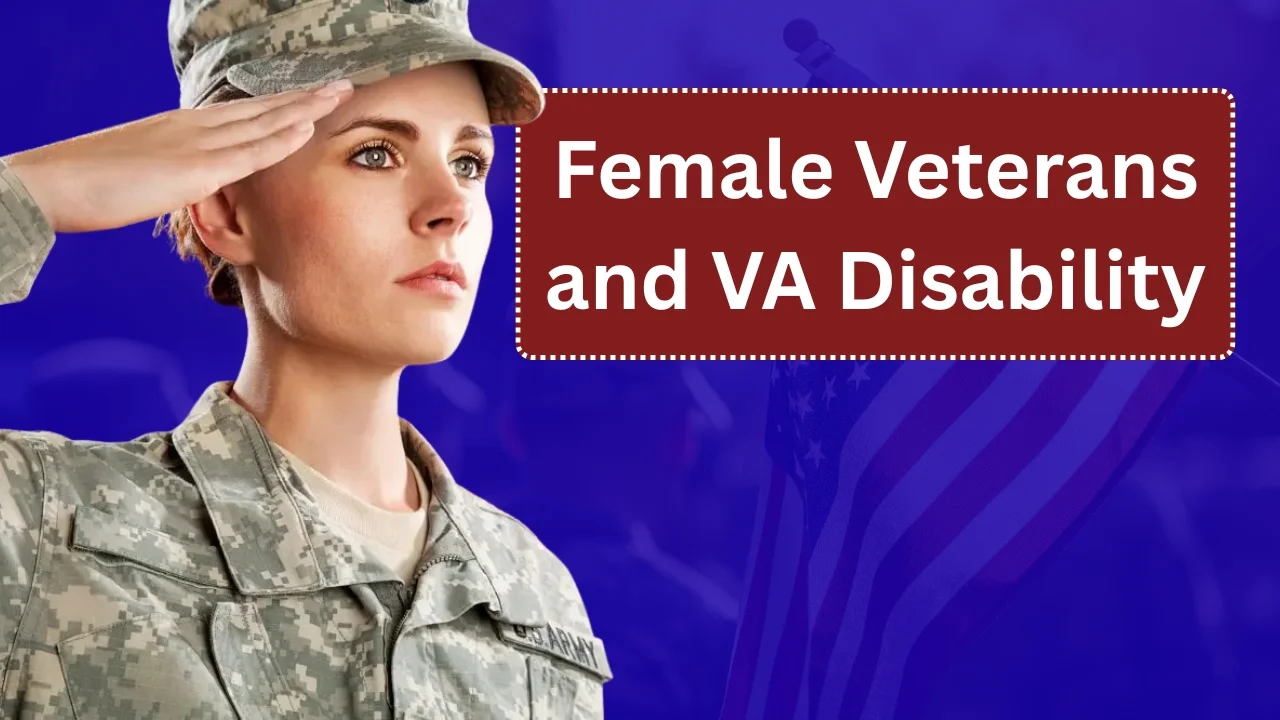
Female veterans represent one of the fastest-growing groups in the VA disability system, with their disability compensation steadily increasing. As of the latest VA data, 726,091 female veterans are receiving disability benefits, which is approximately 12.1% of all VA compensation recipients. On average, these women are receiving $27,714 annually, which is $2,463 more than the $25,251 average for male veterans. Nearly 29% of female veterans are rated 100% disabled, compared to just over 25% of male veterans.

These statistics highlight a shift in how the VA is acknowledging and compensating female veterans, including their unique service-related conditions. This increase in average compensation is a direct reflection of the higher percentage of female veterans who are rated at 70% or higher, especially at the 100% disability rating.
Overview: Female vs. Male VA Disability Data (FY2024)
| Metric | Female Veterans | Male Veterans | All Recipients |
|---|---|---|---|
| Total Receiving Compensation | 726,091 | 5,185,767 | 5,992,967 |
| Percentage of All Recipients | 12.1% | 86.5% | 100% |
| Average Annual Payment | $27,714 | $25,251 | $25,446 |
| New Recipients in FY2024 | 57,921 | 386,888 | 457,919 |
Why Female Veterans Receive Higher Average VA Disability Payments?
The VA assigns disability ratings in 10% increments from 0% to 100%, with higher ratings corresponding to higher monthly payments. For example, a 100% rating starts at $3,831.30 per month in 2025, totaling over $45,000 annually.
While 100% VA ratings are less common overall, female veterans are more likely to fall into the higher end of the scale. Here’s a comparison of disability rating distributions between female and male veterans:
The VA Rating Distribution Breakdown
| Combined VA Rating | Female Veterans (% of female recipients) | Male Veterans (% of male recipients) | Difference |
|---|---|---|---|
| 100% | 28.82% | 25.56% | +3.26 pts |
| 90% | 12.88% | 10.12% | +2.76 pts |
| 80% | 11.45% | 9.80% | +1.65 pts |
| 70% | 10.58% | 8.93% | +1.65 pts |
| 60% | 7.19% | 7.55% | -0.36 pts |
| 50% | 5.37% | 4.70% | +0.67 pts |
| 40% | 5.32% | 5.99% | -0.67 pts |
| 30% | 5.22% | 5.61% | -0.39 pts |
| 20% | 4.63% | 6.35% | -1.72 pts |
| 10% | 8.47% | 15.27% | -6.8 pts |
| 0% | 0.07% | 0.10% | -0.03 pts |
Key Insight:
Female veterans are 3.26 percentage points more likely to be rated 100% disabled than their male counterparts. This significantly contributes to the $2,463 higher average annual compensation.
“The higher proportion of female veterans receiving a 100% disability rating is indicative of the unique challenges they face, including combat exposure, Military Sexual Trauma (MST), and the toll that gender-specific conditions take on their health,” explains Dr. Rachel Adams, a psychologist specializing in veterans’ care.

Key Factors Driving Higher Ratings for Female Veterans
There are several key factors that contribute to the higher ratings and higher compensation for female veterans:
Military Sexual Trauma (MST)
MST is one of the leading contributors to high disability ratings in female veterans. MST often leads to post-traumatic stress disorder (PTSD), which can be compounded by secondary conditions like depression, anxiety, and migraines. Although exact MST statistics aren’t broken down by gender in the report, MST is more prevalent among female veterans and is fully service-connectable, even without a police report.

“Military Sexual Trauma has long been a silent epidemic for female veterans. The VA has made strides in improving the handling of these claims, but the impact on female veterans’ mental and physical health cannot be understated,” says Jennifer Barnes, a veteran service organization (VSO) representative specializing in MST claims.
Increased Combat and Deployment Exposure
Female veterans have been increasingly integrated into combat roles, especially after the Post-9/11 wars. Female veterans from the Gulf War era and beyond have higher average payments, reflecting the physical toll of combat exposure, blast injuries, toxic exposures under the PACT Act, and the demands of prolonged deployments.
More Comprehensive Claims Filing
Many female veterans work with advocates, veteran service organizations (VSOs), or one-on-one coaches to ensure that all conditions primary, secondary, and gender-specific are thoroughly documented. This leads to higher combined VA ratings for female veterans, as more of their conditions are accurately represented in their claims.
“Female veterans are often better supported through advocacy and VSO involvement, which ensures that all conditions are thoroughly documented and addressed. This comprehensive approach helps elevate their disability ratings,” says Thomas Miller, a veteran disability lawyer.
What Conditions Are Female Veterans Claiming Most?
The types of conditions that female veterans are claiming also contribute to their higher disability ratings. Some of the most common conditions claimed by female veterans include:
- Migraines: Female veterans are almost twice as likely to claim migraines compared to male veterans. Migraines can be rated up to 50%, with a value of $1,000 or more per month if they are frequent, prostrating, and severe.
- Gynecological Conditions: Female veterans frequently claim gynecological disabilities, such as ovarian cysts, endometriosis, and reproductive issues. Over 216,000 gynecological disabilities are claimed by female veterans.
- Mental Health Conditions: With approximately 455,000 mental health disabilities claimed, PTSD (especially related to MST) is a major contributor to high ratings, often ranging from 70% to 100%.
- Musculoskeletal Issues: Female veterans also face musculoskeletal issues at rates similar to or higher than their male counterparts, due to the demands of military equipment that is often not designed for their anatomy. These conditions are highly compensable.
The Growth Trajectory: More Female Veterans Are Coming
The number of female veterans receiving compensation continues to rise. In FY2024, 57,921 new female veterans began receiving compensation, which accounts for 12.7% of all new recipients. With women making up about 18% of the active-duty force, and a growing percentage in the reserves and National Guard, the population of female veterans is expected to continue growing, potentially reaching closer to 1 million in the coming years.
“The increase in female veterans receiving VA benefits is a testament to their growing representation in the military and the VA’s evolving response to the needs of these women. The future of female veterans in the VA system looks bright, especially with the expansion of programs like the PACT Act,” says Sarah Thompson, a senior VA policy advisor.
Unique Challenges Female Veterans Still Face
While female veterans’ compensation is increasing, they continue to face significant challenges:
Invisibility:
Female veterans are often not recognized as veterans in daily life. The common phrase “thank you for your service” is often directed at male veterans, and many assumptions persist about veterans being male.
Military Sexual Trauma (MST):
While MST is a significant issue for female veterans, stigma and a lack of proper reporting often prevent many from coming forward. However, MST is now fully service-connectable, even without a police report.
Ill-Fitting Equipment:
Body armor and military gear have traditionally been designed for male bodies, leading to higher rates of musculoskeletal injuries in female veterans. These injuries are fully service-connectable and can contribute to higher disability ratings.
What the Higher VA Compensation Really Means?
The higher average VA compensation for female veterans reflects a combination of more severe disabilities, more thorough documentation of conditions, and greater recognition of gender-specific conditions, such as MST and gynecological issues. It is also a result of the VA’s evolving recognition of the challenges that female veterans face.
Resources Every Female Veteran Should Know
Female veterans are not alone in navigating the VA disability system. Several resources are available to help:
- Women Veterans Call Center: 1-855-VA-WOMEN (1-855-829-6636)
- VA Women’s Health: VA medical centers have MST Coordinators to assist female veterans.
- Support Organizations:
- Service Women’s Action Network (SWAN)
- Disabled American Veterans (DAV) Women Veterans Network
- Final Salute Inc. (assistance for homeless female veterans)
FAQs
Do female veterans really get higher VA disability pay than men?
Yes, on average, female disabled veterans receive $27,714 annually, and male disabled veterans $25,251. This difference is due to a higher proportion of female veterans rated at 100% (28.82% vs. 25.56%).
Do PTSD and Military Sexual Trauma (MST) play a role in higher disability payments for female veterans?
Yes, MST is a major factor, but combat injuries, migraines, gynecological conditions, and musculoskeletal issues all contribute to higher compensation.
Can female veterans claim injuries from ill-fitting body armor?
Yes, musculoskeletal conditions caused by gear that is not designed for female anatomy can be service-connected.
Why are more female veterans getting VA benefits now?
Increased outreach, PACT Act toxic-exposure presumptives, better MST claim processing, and the post-9/11 generation separating are all contributing factors.