For many veterans, the true cost of military service does not fully surface until years after retirement. Chronic pain, mobility limitations, nerve damage, and degenerative conditions often worsen over time, yet countless veterans remain underrated by the VA for decades.

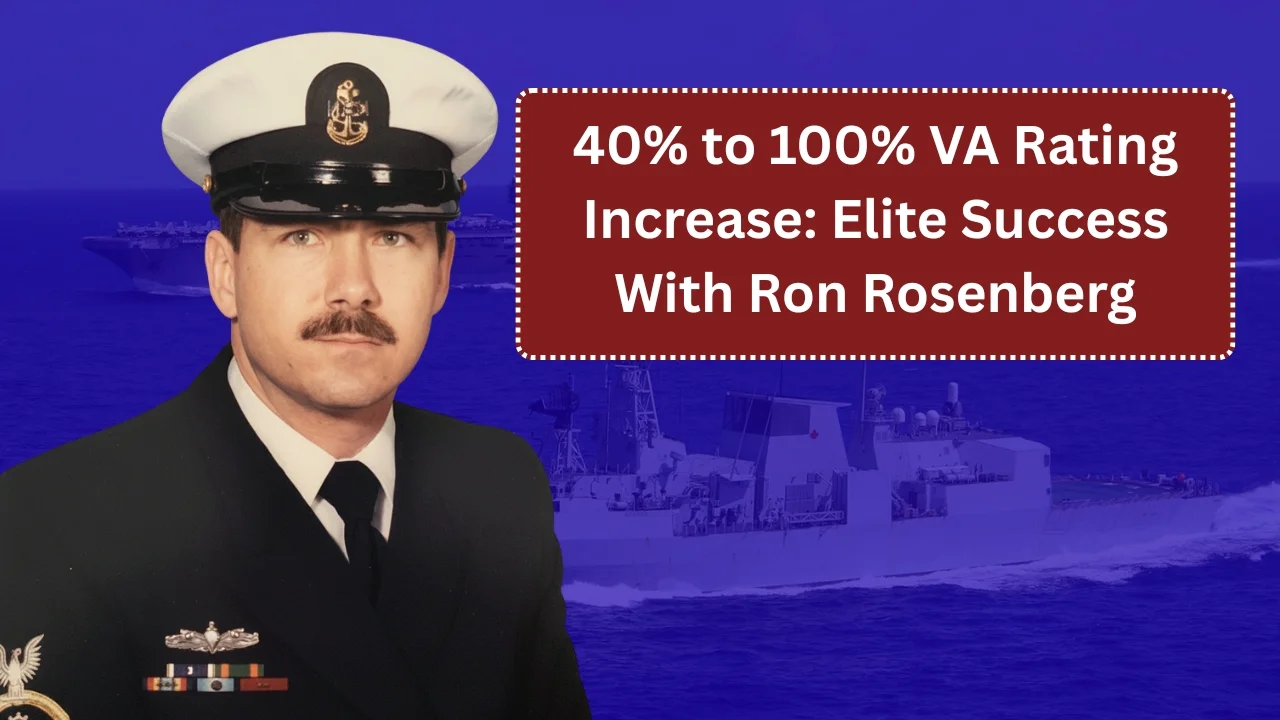
Navy veteran Ron Rosenberg’s journey from a 40% VA disability rating to 100% Permanent and Total (P&T) is a powerful example of what can happen when a veteran learns how the VA system works, documents worsening conditions properly, and refuses to give up.
“Too many veterans assume their first VA rating is final. In reality, it’s often just the starting point,” said by a VA disability coach experienced in rating increase cases.
Also Read VA COLA Increase 2026: What Veterans Need to Know About the New Cost-of-Living Adjustment
Ron’s story is not just about compensation. It’s about recognition, stability, and finally receiving benefits earned through decades of sacrifice.

The Call to Serve: Joining the Navy in a Time of Uncertainty
Ron joined the U.S. Navy in 1974, during a severe economic recession. Steel mills near his hometown in rural northwest Pennsylvania had shut down, leaving few job opportunities.
For Ron, the Navy represented stability, adventure, and purpose.

“I loved the thought of going on a ship, sailing across the pond, visiting different ports,” said by Ron Rosenberg.

After meeting with a recruiter and passing the ASVAB, Ron shipped out to boot camp. Within a month, he was aboard a Navy ship heading for the Mediterranean, launching a career that would span 27 years.
Life at Sea and the Hidden Cost of Service
Ron served as a Shipboard Engineering Plant Program Manager (NEC 4206). The role demanded long hours in cramped engine rooms, heavy lifting, constant ladder climbing, and awkward body positioning in confined spaces.
He loved the camaraderie, leadership, and global travel.
“I don’t think there’s a continent I haven’t stepped on,” said by Ron Rosenberg.
But the physical toll was relentless. Over time, repetitive stress, spinal strain, and joint damage became unavoidable.
“I’d go to sick bay for my lower back, but the only answer I ever got was 800 mg Motrin,” said by Ron Rosenberg.
Like many senior enlisted leaders, Ron pushed through pain rather than risk appearing weak, a decision that would later complicate his VA disability claims.
The Physical Toll After Retirement
By the time Ron retired as an E-9, his body had endured decades of strain. His condition worsened with age, leading to:
- Chronic back pain
- Numbness in the legs and feet
- Mobility limitations
- Shoulder replacement surgery
- Hip replacement surgery
Despite these serious health challenges, Ron initially received only a 40% VA disability rating, a figure that failed to reflect the severity of his service-connected conditions.
Realizing He Was Underrated by the VA
After retirement, Ron assumed his VA rating was permanent. No one explained that veterans can request VA rating increases when conditions worsen.
“It was all Greek to me,” said by Ron Rosenberg, describing the VA process.
As medical appointments became more frequent, Ron began questioning whether his rating truly represented his disabilities. Conversations with fellow veterans at ship reunions confirmed his suspicions.
“I talked to younger sailors I trained who already had higher ratings. That’s when I realized I was seriously underrated,” said by Ron Rosenberg.
Joining the VA Claims Insider Elite Program
Searching for clarity, Ron discovered VA Claims Insider and enrolled in the Elite Membership Program after reviewing other veterans’ success stories.
Within six months, his VA disability rating increased from 40% to 80%.
“Once veterans understand how the VA evaluates worsening conditions, the results can be significant,” explains a VA disability strategy specialist.
With continued coaching, Ron identified additional service-connected conditions, including radiculopathy, stemming from years of spinal stress aboard Navy ships.
The Breakthrough: Approved for 100% Permanent and Total
After filing additional claims and enduring months of waiting, Ron received the decision he had hoped for.
He was approved for 100% Permanent and Total VA Disability.
“I was in tears,” said by Ron Rosenberg. “I had to gain my composure before I could tell my wife. This is a life-changer.”
Ron also received 16 months of VA retroactive pay, providing critical financial relief and long-term stability.
VA Rating Progression: Ron Rosenberg’s Case
| Stage | VA Disability Rating | Key Factors |
|---|---|---|
| Initial Rating | 40% | Multiple service-connected conditions, underestimated severity |
| First Increase | 80% | Proper documentation, worsening conditions, expert guidance |
| Final Outcome | 100% P&T | Additional claims, radiculopathy, cumulative functional loss |
| Retroactive Pay | 16 months | Back pay for delayed entitlement |
Life After a 100% P&T VA Rating
Ron continues to manage daily health challenges, but financial uncertainty is no longer one of them. His 100% P&T status provides:
- Lifetime tax-free VA compensation
- Protection from future rating reductions
- Access to expanded healthcare benefits
- Additional benefits for dependents
“Financial stability allows veterans to focus on healing rather than survival,” said by a veterans’ financial advocate.
While Ron misses the Navy’s camaraderie, he does not miss the physical toll.
“It wreaks havoc on your body,” said by Ron Rosenberg.
Why Ron’s Story Matters to Other Veterans?
Ron’s experience highlights critical truths:
- VA ratings can be increased when conditions worsen
- Many veterans are underrated for years or decades
- Guidance and education can change outcomes
- Persistence is essential in the VA system
“The VA system rewards evidence and perseverance, not silence,” explains a former VA claims reviewer.
Final Thought
Ron Rosenberg’s journey from 40% to 100% VA disability shows what’s possible when veterans advocate for themselves and seek proper guidance. His story is a reminder that VA disability ratings are not fixed forever and that persistence can lead to life-changing outcomes.
“Never give up,” said by Ron Rosenberg. “Keep the goal in mind, and you’ll get there.”
FAQs
Can a veteran really go from 40% to 100% VA disability?
Yes. If service-connected conditions worsen or new secondary conditions develop, veterans may qualify for higher ratings, including 100% P&T.
What does 100% Permanent and Total (P&T) mean?
It means the VA has determined your disabilities are both totally disabling and unlikely to improve, providing lifetime benefits and protection from routine reexaminations.
How long does a VA rating increase take?
Timelines vary, but rating increases can take several months depending on evidence, exams, and VA workload.
What is VA retroactive pay?
Retroactive pay compensates veterans for benefits owed from the effective date of entitlement to the approval date.
Do I need proof my condition worsened?
Yes. Medical records, exams, and documentation showing increased severity are critical for rating increases.
Should veterans assume their first VA rating is correct?
No. Many veterans are underrated initially and should periodically review their ratings as conditions change.